
Walker Windows Knowledge Base
Blog & Industry Insights
Technical installation guides, pre-construction best practices, and commercial window news.
Buying Residential sliding patio doors is not simply a style decision. The right unit must manage daylight, weather, security, ventilation, and daily movement. A door that looks elegant in a showroom may drag across its track after one wet season. Small details matter.
The U.S. Department of Energy reports that windows can cause 25% to 30% of residential heating and cooling energy use. That figure makes glass choice, frame material, air leakage, and installation quality important. The ENERGY STAR program also recommends checking climate-specific performance ratings before purchase. Look for U-factor, solar heat gain coefficient, visible transmittance, and air-leakage information. NFRC labels make these values easier to compare across products. Still, ratings do not replace a careful site inspection.
Installation changes performance.
The Fenestration and Glazing Industry Alliance emphasizes proper flashing, drainage, and fastening practices. These steps help prevent water intrusion around the opening. NAHB remodeling guidance also shows that replacement projects depend heavily on accurate measurements and coordinated workmanship. Therefore, this guide will explain ten practical tips, from measuring the rough opening to selecting rollers, locks, glass, screens, and warranties. It will also consider traffic patterns, furniture clearance, local weather, and long-term maintenance.
No checklist is perfect. A low price can hide weak hardware or difficult repairs. A premium door can still fail when installed poorly. Careful buyers should question vague claims, request performance documentation, and inspect the track with their hands. A smooth test glide is useful, but it is only one clue. Real value appears years later, during rain, temperature changes, and everyday family use.
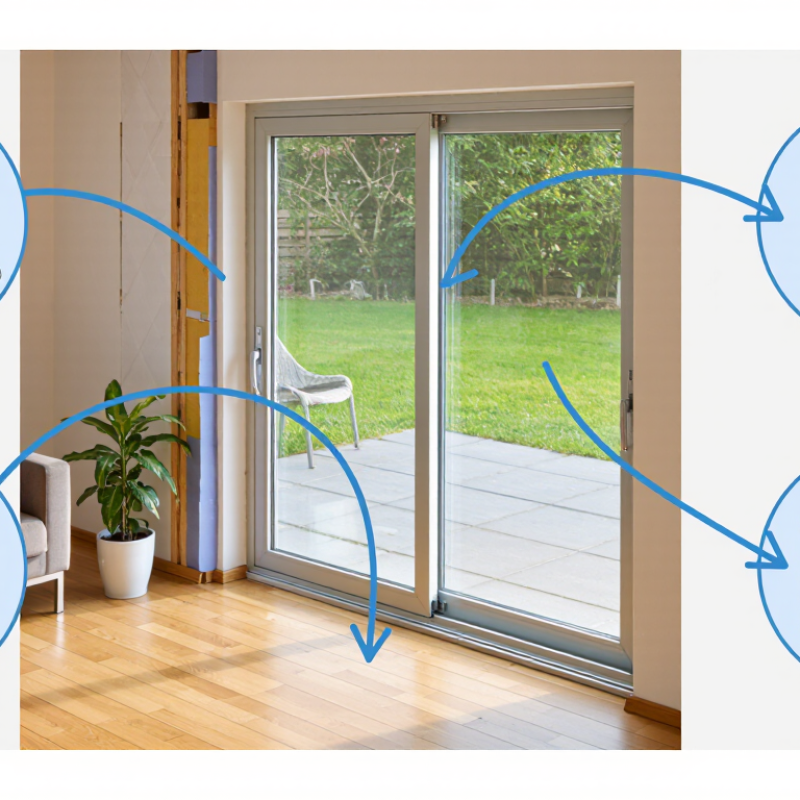
Define Your Space, Door Size, and Opening Requirements
Define your space before choosing a door. Tip: Sketch furniture, walking paths, and the exterior landing. A door may fit the wall but block a chair. Tip: Check sunlight, prevailing rain, and nearby drainage. DOE Energy Saver guidance estimates windows account for 25–30% of household heating and cooling energy use. Large glass areas need careful solar-control planning.
Tip: Measure the existing opening at the top, middle, and bottom. Record width, height, and diagonal measurements. Tip: Compare the rough opening with the actual door unit size. Do not measure only the visible frame. Tip: Check whether the wall is plumb, level, and square. Small errors become obvious when panels slide. A perfect-looking fit can still feel wrong. Tip: Confirm the sill depth, interior trim, exterior cladding, and drainage path before ordering.
Tip: Identify the active panel and its travel direction. Tip: Leave clearance for handles, curtains, and screens. Tip: Review the NFRC label for U-factor and solar heat gain coefficient. Lower U-factor generally indicates better insulation, while SHGC should match your climate and exposure. NAHB’s 2024 What Home Buyers Really Want report also places energy-efficient windows among highly desirable features. Tip: Select a threshold that suits mobility needs and local weather. Tip: Ask the installer to verify local safety-glazing, egress, flashing, and structural requirements. I have learned that “standard size” is often not standard at all. Recheck every measurement before fabrication.
10 Tips for Buying Residential Sliding Patio Doors: Define Your Space, Door Size, and Opening Requirements
Use this planning table to evaluate the room, measure the opening, and identify installation requirements before selecting a residential sliding patio door.
| No. | Planning Dimension | What to Measure or Define | Practical Buying Guidance | Key Requirement or Reference Point |
|---|---|---|---|---|
| 1 | Define the room and traffic path | Identify furniture locations, walking routes, nearby walls, and the direction of travel through the doorway. | Keep the operating panel clear of sofas, cabinets, grills, and other objects. A sliding door is useful where a swinging door would consume floor space. | Confirm: The full panel travel zone remains unobstructed after furniture is placed. |
| 2 | Measure the existing door opening | Record the width at the top, center, and bottom, then measure the height at the left, center, and right. | Use the smallest width and height when checking fit. Measure from the actual structural or framed opening, not only from the visible glass or trim. | Best practice: Take at least three measurements in each direction and note any variation. |
| 3 | Separate nominal size from actual size | Compare the advertised nominal door size with the product's actual frame dimensions and required rough-opening dimensions. | A nominal size is a design label; it is not necessarily the exact outside-frame measurement. Do not order from a nominal size alone. | Verify: Actual unit size, rough-opening size, and installation clearance in the selected product documentation. |
| 4 | Check the finished floor and sill height | Measure the distance from the finished interior floor to the sill, plus the exterior landing surface and any step-down. | A replacement door may require sill adjustment, flooring modification, or transition treatment. Plan for water management where the exterior surface is exposed to rain. | Inspect: Level, solid support under the sill and a properly sloped exterior drainage condition. |
| 5 | Choose the opening configuration | Decide whether the active panel should operate from the left or right when viewed from inside, and whether a two-, three-, or four-panel layout is suitable. | The active-panel position should match the main traffic route, furniture arrangement, and exterior access. More panels can increase viewing area but may also add weight and complexity. | Confirm: Handing, panel count, fixed-panel location, and minimum clear passage before ordering. |
| 6 | Evaluate usable clear opening | Check the passage width after the frame, meeting stile, handle, and operating panel are installed. | The visible glass width is not the same as the walk-through width. If accessibility is important, evaluate the clear opening against the applicable local accessibility requirements. | Reference: A 32-inch clear opening is a common accessibility target for many residential passage applications, but local rules and door configuration must be checked. |
| 7 | Match glass to climate and exposure | Consider solar direction, local temperature range, wind exposure, condensation risk, and the need for safety glazing. | Insulating glass with low-emissivity coating can reduce heat transfer. Select the glass performance level according to climate and orientation rather than appearance alone. | Compare: U-factor, solar heat gain coefficient, visible transmittance, and safety-glazing requirements where applicable. |
| 8 | Confirm weather resistance | Review the door's water, air, structural, and forced-entry performance information for the intended exposure. | A door facing driving rain or strong wind needs suitable weather seals, flashing, drainage, and installation detailing. Performance depends on both the product and the installation. | Ask for: Tested performance data and installation instructions appropriate for the project's location and wall system. |
| 9 | Inspect the wall and framing condition | Check studs, headers, subfloor, sill support, moisture damage, rot, and whether the existing opening is square and plumb. | A damaged or out-of-square opening can cause poor panel alignment, difficult operation, air leakage, and premature hardware wear. | Measure: Diagonals for squareness and use a level or plumb tool on both jambs and the sill. |
| 10 | Plan installation, maintenance, and replacement access | Determine who will install the unit, how it will be transported, and how rollers, locks, screens, and seals can be serviced later. | Large glass panels are heavy and may require more than one installer. Select adjustable rollers, replaceable weather seals, and accessible hardware when long-term maintenance matters. | Prepare: Safe handling space, protection for finished surfaces, drainage materials, and a post-installation adjustment plan. |
Important: Dimensions, clearances, performance ratings, and installation details vary by door design and local building requirements. Always confirm the final rough opening and installation method using the selected product's current technical documentation and applicable local codes.
FAQS
Choose a strong lock that engages deeply into the frame. A secondary latch adds resistance. Test it twice.
Look for anti-lift blocks, especially on ground-level doors. The panel should not rise easily from its track.
Safety-rated tempered or laminated glass is a sensible choice. Inspect the meeting rails for exposed gaps.
Check whether the frame stays square during movement. Examine corners, rollers, sill joints, and the handle.
Not necessarily. Easy movement can hide poor alignment or loose hardware. Apply gentle pressure while testing the handle and lock.
Look for continuous gaskets, interlocking meeting stiles, and clear sill drainage paths. Weep holes must remain open.
Include delivery, installation, disposal, flashing, screens, locks, permits, and possible water-damage repairs. Keep a small reserve.
Check coverage for glass seals, rollers, frames, finishes, labor, and installation. Ask how replacement parts are handled.
Slide it several times and listen for scraping. Check the lock, handle, frame, and sill. Appearance is not enough.
Conclusion
Choosing Residential sliding patio doors starts with understanding your space, including the wall opening, available clearance, and the door size needed for a proper fit. Compare materials such as vinyl, aluminum, wood, and composite, while also reviewing glass options, insulation values, and energy ratings suited to your climate. Strong locks, durable frames, impact-resistant components, and reliable weather sealing can improve comfort, safety, and long-term performance.
Before buying, test how smoothly the door operates and consider accessibility for all household members. Think about cleaning, lubrication, screen maintenance, and whether professional installation is necessary. A realistic budget should include the door, hardware, delivery, preparation, and installation costs. Finally, compare warranties carefully, paying attention to coverage for the frame, glass, hardware, finish, and installation. By evaluating these factors together, you can select a practical, attractive, and durable sliding door that fits your home and everyday needs.