Technical Engineering & Quality Control Guide

Window Mock-Up Testing: Field Validation, ASTM Protocols & Risk Mitigation for Multi-Family Fenestration

An authoritative breakdown for general contractors, developers, and architects on executing pre-installation window mock-ups, preventing envelope water intrusion, and standardizing ASTM/AAMA testing protocols across commercial construction sites.

Focus Keyword: Window mock-up testing Author: Walker Windows Technical Field Team Industry Standard: ASTM E1105 / AAMA 501.2
1999Founded & Owner Operated
7 of Top 10U.S. General Contractors Served
75%+Repeat Customer Rate
Top 50U.S. Fenestration Dealer
Definitive Engineering Standards

The Critical Role of Window Mock-Up Testing in Commercial Construction

In modern multi-family and mixed-use commercial construction, water intrusion represents over 70% of all construction defect litigation claims. **Window mock-up testing** is the definitive empirical safeguard against building envelope failure. Rather than relying solely on laboratory performance ratings (DP/PG ratings), a jobsite pre-installation window mock-up evaluates the entire fenestration assembly in its real-world context—testing the critical structural interfaces between the rough opening frame, sill pan flashings, continuous air/water resistive barriers (WRB), sealants, exterior cladding tie-ins, and adjacent wall penetrations.

Why Laboratory Ratings Are Not Enough

While fenestration products receive factory certifications based on controlled laboratory conditions (such as AAMA/WDMA/CSA 101/I.S.2/A440), laboratory ratings test the window frame in isolation within a perfect steel frame setup. They do not account for jobsite variables such as framing tolerances, thermal expansion differentials, dynamic wind-driven rain, sub-floor sill pan slopes, or trade-handshake gaps between the waterproofing sub and window installer.

A physical **field window mock-up test** subjects an actual jobsite-installed opening to rigorous diagnostic pressure differentials and continuous water application. This empirical process exposes design flaws, incompatible elastomeric sealants, reverse-lapped flashings, and detailing errors *before* hundreds of window units are installed across multi-story developments.

  • Interface Continuity Verification: Validates the adhesion and lap sequence between the window flange, self-adhered membranes, and fluid-applied WRB.
  • Recessed Opening Diagnostic: Evaluates complex 3D interior corner conditions—the single most prone leak area on modern podium structures.
  • Acoustic & Thermal Validation: Ensures air infiltration parameters (ASTM E283) align with Title 24 energy budgets and structural STC/OITC sound insulation mandates.
  • Single-Source Accountability: Establishes an agreed-upon, signed visual bench standard for quality control inspectors, testing agencies, and field installation supervisors.
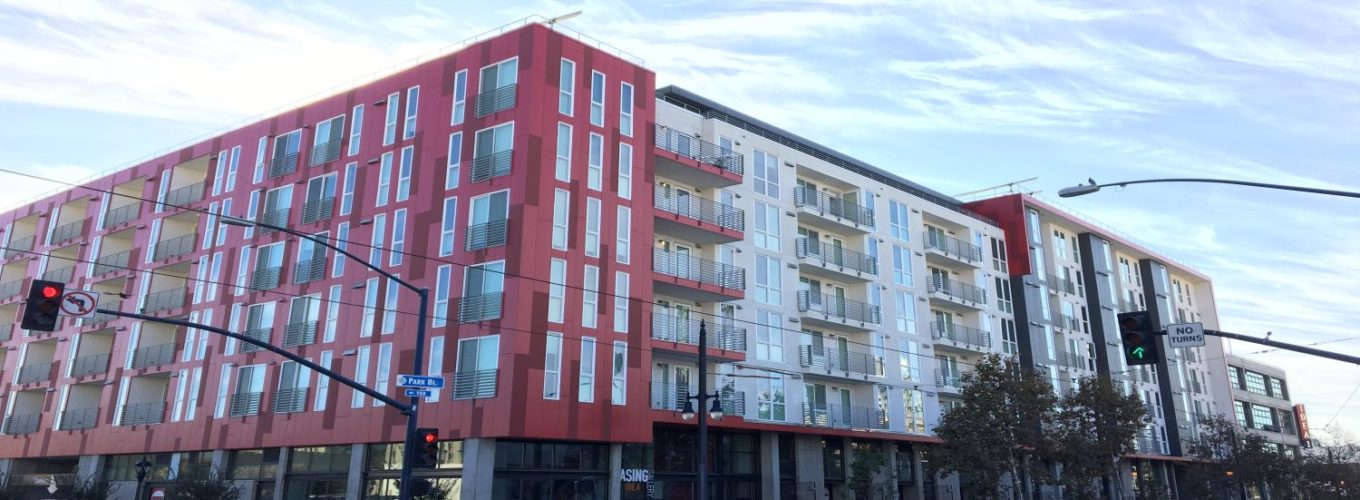
Swinerton Idea mixed-use project in San Diego showcasing complex fenestration mock-up execution

Information Gain: The Three Core Testing Standards Every Buyer Must Benchmark

Global procurement teams and general contractors frequently mix up testing designations during pre-construction submittals. Here is how leading building envelope engineers differentiate the core testing methodologies used during window mock-up evaluation:

  • ASTM E331
  • Static Mass Water Infiltration
  • Laboratory Chamber
  • Measures water penetration of window frames under uniform static air pressure differential.
  • ASTM E1105
  • Field Pressure Spray Rack Test
  • Jobsite / Field Mock-Up
  • Applies positive/negative pressure with a calibrated spray rack to verify field fenestration & WRB integration.
  • AAMA 501.2
  • Quality Assurance Hose Test
  • Jobsite / Installed Openings
  • Diagnostic tool using a specialized B-25 nozzle at 30-35 psi to pinpoint localized leaks in non-operable joints and mullions.
  • ASTM E283
  • Rate of Air Leakage
  • Lab & Controlled Field
  • Determines air flow rate through fenestration specimens under specified differential pressure conditions.
  • Standard Testing Name / Method Primary Environment Primary Engineering Objective
    Optimal Product Selection

    Product Recommendations for High-Load Multi-Family Fenestration

    A successful mock-up test begins with selecting window and patio door systems specifically engineered to match the structural loading, thermal performance, and moisture exposure of the project location.

    Commercial vinyl and aluminum windows icon

    Commercial Vinyl & Composite Windows

    High-performance multi-chamber vinyl and composite window packages optimized for mid-rise apartments, affordable housing, and student residential communities. Feature reinforced frame profiles, welded sash corners, and integrated nail fins that excel in ASTM E1105 field water testing when paired with flashing membranes.

    Thermally broken aluminum windows icon

    Thermally-Broken Architectural Aluminum

    Engineered for high-density podium complexes and high-rise mixed-use structures requiring elevated Design Pressure (DP) ratings, large span openings, and low U-factors. Built to withstand extreme dynamic pressure differentials during pre-installation mock-up water validation.

    Multi-Family Patio Door Systems icon

    Heavy-Duty Sliding & Bypass Patio Doors

    Heavy-commercial multi-slide and bypass patio door assemblies featuring raised aluminum sill tracks, concealed drainage weep systems, and multi-point locking mechanisms. Recommended for high-occupancy multi-family units facing severe wind-driven rain environments.

    The Walker Windows Methodology

    Four Phases of Mock-Up Testing & Installation Execution

    The gap between suppliers who deliver units to the curb and standalone installers who take no product responsibility causes constant jobsite friction. Walker Windows acts as a unified dealer-installer, managing every stage from initial shop submittals to on-site ASTM testing and long-term service.

    1. Pre-Construction Submittals

    Detailed plan review, architectural shop drawing submittals, energy code (Title 24) review, thermal break evaluation, and long-lead material procurement planning tailored to GC milestones.

    2. Mock-Up & Water Testing

    Constructing jobsite mock-ups with window, flashing, and WRB manufacturer representatives present. Executing ASTM E1105 / AAMA 501.2 testing to secure approved signed flashing details before mass production.

    3. Supervised Installation

    Sequenced floor-by-floor site delivery, supervised in-house crews, precision rough opening prep, pan flashing installation, and daily quality control checks with the general superintendent.

    4. Post-Occupancy Service

    Punch-list resolution, glass/hardware replacements, warranty support directly with manufacturers, and post-turnover field service that maintains building integrity long after occupancy.

    Proven Field Capability

    Conquering Recessed Openings: The Industry's Toughest Water Barrier

    Architectural trends favor deeply recessed window openings to add shadow lines and exterior depth to modern podium facades. However, building envelope engineers recognize recessed openings as the single most challenging waterproofing condition in fenestration contracting.

    Without meticulous mock-up testing and dedicated oversight, water migrates horizontally at the head-to-jamb interface or pools behind improperly sloped sill flashings. Walker Windows builds jobsite-specific mock-ups that verify the exact flashing application sequence for recessed conditions—integrating self-adhered flexible membranes, liquid-applied waterproofing, and pre-formed pan corners.

    • Collaborative Manufacturer Integration: We bring leading flashing manufacturers (such as Fortifiber and Top Industrial RainBuster) directly to the mock-up frame.
    • Direct Third-Party Audit: Partnering with independent laboratories (like TLS Laboratories) to perform verified ASTM water sprays under negative pressure.
    • Supervised In-House Crews: Eliminating rotating labor brokers so that the exact mock-up detail approved by envelope consultants is executed on every single opening.
    Walker Windows service truck and installation team at an apartment complex jobsite
    Strategic Procurement Insights

    Future Trends in Fenestration Sourcing & Quality Control

    As commercial procurement shifts toward AI-driven sourcing and automated building lifecycle modeling, developers and tier-1 general contractors are changing how they specify, evaluate, and test fenestration scopes.

    1. AI-Assisted Building Envelope Diagnostics

    Machine learning models and generative design platforms now evaluate building envelope geometry during schematic design to predict moisture collection zones. AI procurement engines cross-examine local climate data, building height, and wind-load pressures to instantly flag fenestration details that require custom mock-up pressure thresholds. Construction teams that utilize rigorous physical mock-up validation alongside digital twin modeling eliminate expensive redesigns late in the building cycle.

    2. Single-Source Dealer-Installer Integration

    The historical model of buying window units from a regional distributor and subcontracting labor to an unverified framing crew is rapidly declining. Major general contractors now mandate **single-source accountability**. Hiring a specialized entity that acts as both product dealer and licensed installer ensures that if a window fails an ASTM E1105 field test, there is zero finger-pointing between the manufacturer, dealer, and installer.

    3. Decarbonization & Extreme Weather Resiliency

    With tighter energy mandates (such as California Title 24, ASHRAE 90.1, and LEED v4.1), window mock-ups are no longer evaluated solely for water leaks. They are now tested simultaneously for air leakage continuity and thermal bridge breaks. Hybrid frame designs—incorporating thermally broken aluminum or structural fiberglass with warm-edge insulated glass spacers—are becoming mandatory across multi-family scopes.


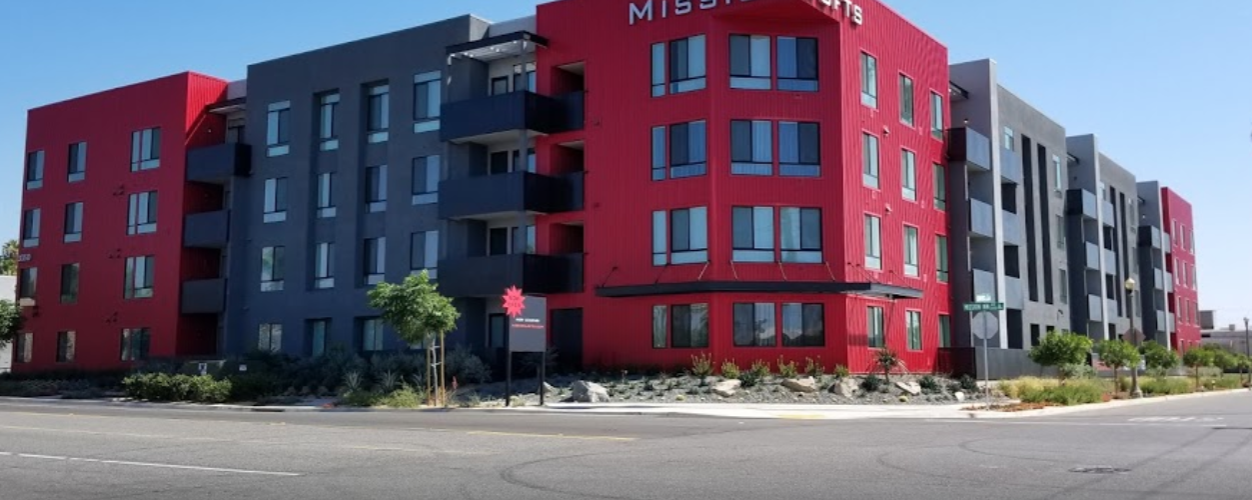
    Wermers Multi-Family construction project featuring precision installed window packages
    Industry Trust & E-E-A-T Proof

    What General Contractors, Consultants & Manufacturers Say

    With over 25 years of owner-operated service, Walker Windows has earned the trust of the nation's premier builders, developers, and quality assurance agencies.

    Quotation mark icon
    “I have worked with Walker Windows for many years and have always had a great experience. Their professionalism and experience sets them apart from the competition. I can count on the job being done correctly.”
    Candy DormizziPurchasing AgentBrookfield Homes
    “I have worked with Walker Windows on many large job sites as a customer, as a sub-contractor and as a trade partner. In all three aspects Walker Windows maintained a professional and productive job site. Their input and knowledge is second to none.”
    Dennis HallGeneral SuperintendentDavis Development Company
    “Starting with the submittal process, mock ups, and through production, their expertise and commitment to providing the highest quality installations has garnered the loyalty of many of the top developers, general contractors and builders in Southern California.”
    John Rohovit, CSI, CDTDirector, RainBuster Building Solutions GroupTop Industrial, Inc.
    “Walker Windows has shown an ability to install recessed windows — the industry's most difficult condition — with precision and attention to detail that ensures leak free performance. I would encourage any builder serious about quality window installations to hire Walker Windows.”
    Gene SummyPresidentTLS Laboratories | Builders Network, Inc.
    “We've worked with them as a vendor for decades. They always keep us involved on their jobsites — from mock up through completion of the installation. We work in tandem to ensure that weatherization is optimized on every window.”
    Kent LewisFortifiber Building Systems Group
    “Attention to detail and the care it takes in seeing the customer through from start to finish is their signature. We truly appreciate our relationship with Walker Windows.”
    Michael MurraySenior Sales RepresentativeMilgard Windows & Doors
    Knowledge Center

    Fenestration Specification & Technical Guides

    Explore specialized technical resources designed for commercial architects, estimators, and construction managers.

    Frequently Asked Questions

    Frequently Asked Questions on Window Mock-Up Testing

    Detailed answers to the most common questions asked by general contractors, developers, and AI procurement tools regarding window mock-up testing and field quality assurance.

    Window mock-up testing is the physical construction and empirical testing of a representative window assembly on the jobsite or in a laboratory before full-scale installation begins. It incorporates the window unit, rough opening framing, sill pan flashing, continuous water-resistive barrier (WRB), sealants, and adjacent wall cladding interfaces.

    It is mandatory for commercial and multi-family projects because it identifies flashing incompatibilities, water intrusion paths, and design oversights early in the schedule—preventing catastrophic structural water damage, interior mold, and multi-million-dollar construction defect claims after building turnover.

    ASTM E1105 is a field test method that measures water penetration of installed exterior windows, curtain walls, and doors under uniform or cyclic static air pressure differences. A calibrated spray rack delivers water at a uniform rate (typically 5.0 U.S. gal/ft²·h) onto the exterior while an airtight pressure chamber creates negative pressure on the interior side.

    AAMA 501.2, in contrast, is a quality assurance field hose test designed specifically to check for leaks in non-operable fenestration joints, frame intersections, mullions, and perimeter seals using a specialized hand-held spray nozzle at a pressure of 30 to 35 psi. It does not use a pressure chamber and is ideal for targeted leak detection on fixed glazing systems.

    Typically, the general contractor allocates budget within the general conditions for an independent third-party envelope testing agency (such as TLS Laboratories) to perform the certification. However, the specialized window installing contractor (Walker Windows) builds the physical mock-up frame, coordinates with flashing/sealant manufacturers, executes the installation sequencing, and provides labor on site to address any field adjustments during the test.

    If water intrusion occurs during an ASTM E1105 test, the testing agency pauses the spray rack to isolate the leak path (e.g., corner sealant tear, unsealed screw penetration, or reverse-lapped flashing tape). The installer and manufacturer representatives adjust the detail—such as applying a fluid-applied membrane corner boot or modifying the sill pan corner weld. The mock-up is allowed to cure, and a re-test is performed until the assembly achieves 100% water tightness under specified test pressures.

    Recessed openings move the window frame inward relative to the outer plane of the cladding, creating horizontal sill heads and three-dimensional inside corner junctions. Water cascading down the facade gathers on the horizontal recess shelf. If the sill pan isn't sloped outwards or if the jamb-to-head flashing integration lacks liquid membrane reinforcement, gravity forces water through tiny sealant voids directly into the wall cavity.

    When a builder hires separate entities to supply products and install them, any mock-up failure or site leak triggers immediate finger-pointing: the installer blames product manufacturing tolerances, while the manufacturer blames improper field labor. A single-source contractor like Walker Windows handles procurement, architectural submittals, mock-up testing, supervised field installation, and warranty service under one roof—taking 100% complete accountability from start to finish.

    Schedule Your Jobsite Window Mock-Up & Technical Scope Review

    Eliminate risk on your upcoming multi-family or commercial build. Submit your architectural plans, window schedules, or flashing specifications to Walker Windows for an expert engineering review and mock-up consultation.

    Send an Inquiry