

1. The Technical Evolution of Vinyl Window Manufacturing in China
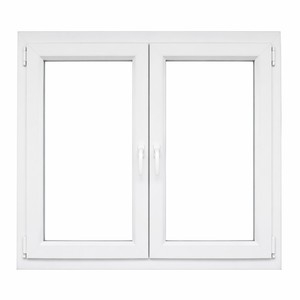
Over the past two decades, China’s vinyl (unplasticized polyvinyl chloride - uPVC) window manufacturing sector has undergone a profound technological transformation. Transitioning from legacy single-chamber profile extrusions to state-of-the-art 5 to 7-chamber thermal structures, top-tier Chinese factories now engineerfenestration products that directly compete with—and frequently surpass—traditional North American and European fabrications in both mechanical performance and thermal efficiency.
Modern vinyl window manufacturing centers on advanced material formulation. Leading China factories utilize 100% virgin uPVC compound mixed with environmentally sustainable Calcium-Zinc (Ca-Zn) heat stabilizers, eliminating toxic lead additives entirely. This raw compound formulation prevents yellowing, chalking, and brittle thermal degradation under high UV radiation environments, making high-spec Chinese vinyl windows suitable for severe climate zones ranging from the intense solar heat of the U.S. Sun Belt to sub-zero Nordic winters.
Engineering Fact: High-grade Ca-Zn stabilized virgin uPVC profiles maintain structural integrity across extreme temperature gradients (-40°C to +82°C) while achieving low thermal conductivity (K-value ≤ 0.13 W/m·K), drastically superior to non-thermal break metal frames.
Furthermore, precision extrusion technology now incorporates fusion-welded corner jointing systems that reach corner tensile break forces exceeding 3,000 Newtons. Combined with galvanized steel reinforcement inserts (minimum wall thickness 1.5mm to 2.0mm) fitted into the primary profile chamber, modern Chinese vinyl windows eliminate frame deflection under extreme wind pressure loads (up to DP65 or higher depending on architectural specification).
2. Structural Engineering & Thermal Performance Analysis
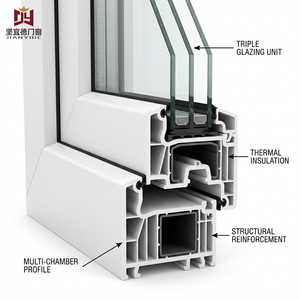
To meet stringent international energy efficiency codes—such as ENERGY STAR® 7.0 guidelines in North America and Passive House (Passivhaus) PHI standards in Europe—China manufacturers have re-engineered the internal geometry of vinyl frames. The integration of multi-chamber profile architectures creates insulated dead-air pockets that effectively impede thermal conduction, convection, and radiation.
When paired with advanced insulated glass units (IGUs)—featuring double or triple-pane Low-E coatings, warm-edge silicone spacer bars (such as Technoform or Swisspacer), and 90%+ Argon or Krypton gas fill—system u-factors drop as low as 0.14 BTU/h·ft²·°F (U-value ≤ 0.80 W/m²K). This represents a 40% improvement in energy savings compared to standard dual-pane thermal-break aluminum profiles.
| Performance Metric | Multi-Chamber uPVC (China Premium) | Standard Thermal Break Aluminum | Traditional Softwood Frame |
|---|---|---|---|
| Thermal Conductivity (K-Value) | 0.13 - 0.17 W/m·K (Exceptional) | 1.8 - 2.8 W/m·K (Moderate) | 0.13 - 0.15 W/m·K (Good) |
| Corner Joint Method | Seamless Fusion-Welded (Water-tight) | Mechanical Cleat & Crimp | Mortise & Tenon / Adhesive |
| Acoustic Insulation (STC Rating) | STC 38 - STC 45 (Triple Glazed) | STC 32 - STC 38 | STC 34 - STC 40 |
| Maintenance Requirements | Zero Maintenance (UV Stabilized) | Low (Anodized / Powder Coated) | High (Repainting / Sealing) |
| Cost Efficiency Index | High (Optimal ROI) | Medium to High Cost | Very High Initial Investment |
3. Future Procurement & Sourcing Trends in the Global Window Market (2026–2030)
As general contractors, real estate developers, and commercial architectural firms face rising material costs and stricter carbon footprint regulations, global procurement dynamics for fenestration products are rapidly shifting. Several dominant procurement trends are dictating the future of China-sourced vinyl windows:
A. Hybrid Material & Narrow-Frame Aesthetic Demand
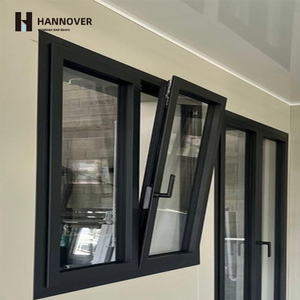
Architects increasingly demand the sleek, minimalist aesthetics of modern commercial architecture without sacrificing the superior thermal insulation of vinyl. Consequently, Chinese manufacturers are pioneering Aluminum-Clad Vinyl Systems and ultra-narrow sightline uPVC profiles. By applying an exterior extruded aluminum skin over a multi-chamber vinyl core, factories deliver high-end powder-coated metallic finishes on the exterior facade while maintaining unbeatable interior thermal resistance and condensation prevention.
B. Factory-Integrated Smart Glazing & Security Protocols
Procurement specifications now frequently request smart-building integrations directly at the manufacturing level. Top Chinese factories are embedding micro-sensors for automated HVAC zoning, electrochromic smart-tinting glass interlayers, and multi-point hardware lock setups (utilizing premium German systems like ROTO, SIEGENIA, or GU) to comply with forced-entry and anti-theft standards (PAS 24 / ASTM F588).
C. Turnkey OEM/ODM Submittal & Mock-Up Validation Packages
International buyers no longer accept simple off-the-shelf catalog products. Modern B2B window sourcing requires a fully integrated engineering partner capable of providing 3D CAD/BIM shop drawings, structural calculation reports, window flashing mock-ups, and field water penetration test verification prior to shipping bulk containers. Leading manufacturers maintain in-house architectural engineering departments dedicated to converting Western building plans into precise factory production schematics.
4. Enterprise Manufacturing Advantage: Closing the Supplier-Installer Quality Gap
Historically, the vast majority of jobsite window failures—such as water leaks, frame racking, and seal failure—do not stem from inherent factory material flaws, but rather from the disconnect between component manufacturers and field installers. Our unified manufacturing and technical support philosophy actively bridges this gap.
With a legacy rooted in deep OEM manufacturing and international project supply since 1999, our operational methodology controls every phase of the fenestration lifecycle:
- Phase 1: Pre-Construction Engineering & Submittals: Comprehensive plan review, structural wind-load analysis, opening clearance calculations, and official submittal drawing approval.
- Phase 2: Jobsite Mock-Up Assembly & Testing: Prior to full-scale extrusion and glazing, sample windows undergo rigorous chamber testing for air infiltration (ASTM E283) and water resistance (ASTM E331/E547) under dynamic pressure.
- Phase 3: Precision Manufacturing & Sequenced Packaging: Automated CNC cutting, 4-point seamless welding, and unit packaging sequenced floor-by-floor or building-by-building to streamline jobsite unloading.
- Phase 4: Post-Occupancy Service & Warranty Backing: Dedicated post-sale warranty support, supply of replacement hardware parts, and long-term technical guidance for multi-family property owners.
Recessed Opening Mastery: Recessed window flashing is widely recognized as the construction industry’s most challenging waterproofing condition. Our factory-engineered installation accessories and sill pan guidance guarantee leak-free integration with all Weather-Resistive Barriers (WRB).