

High-Performance Architectural Insulating Glass Solutions
Engineered for extreme thermal insulation, structural integrity, acoustic control, and solar energy regulation. Certified to CE, CCC, SGCC, and ASTM standards.
Evaluating China's Top Insulating Glass Factories: Technical Rigor & Quality Control
A comprehensive analysis of Insulating Glass Unit (IGU) manufacturing standards, Low-E magnetron sputtering, acoustic damping engineering, and structural seal integrity.
Modern architectural fenestration demands an intricate balance between net-zero thermal efficiency, structural resilience against wind loads, acoustic attenuation, and multi-decadal seal longevity. As commercial curtain wall specifications and residential multi-family housing standards evolve under Title 24, ASHRAE 90.1, and international green building codes, global developers, general contractors, and facade consultants increasingly rely on elite Insulating Glass Units (IGUs) manufactured in China. However, navigating the landscape of China top insulating glass factories requires a rigorous understanding of raw material selection, automated double-seal processing, warm-edge spacer technology, and jobsite mock-up verification.
Most post-installation fenestration failures—ranging from desiccant saturation, glass distortion, and perimeter fogging to seal failure and thermal stress fracture—originate not from site installation errors alone, but from fundamental micro-defects introduced during factory fabrication. Elite manufacturing ecosystems bridge this gap by enforcing strict cleanroom assembly, dual-seal robotics (polyisobutylene primary seal combined with structural silicone or polysulfide secondary seal), and integrated quality assurance protocols from pre-construction submittals through field delivery sequencing.
Dual-Seal Integrity
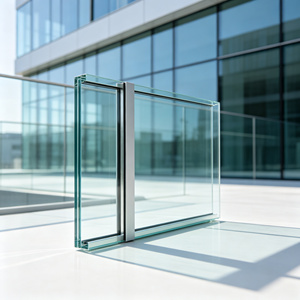
Primary PIB seal prevents moisture vapor transmission (<0.1g/m²/24h), while structural silicone secondary seal resists wind load pressure and thermal shear.
Low-E Spectral Selectivity
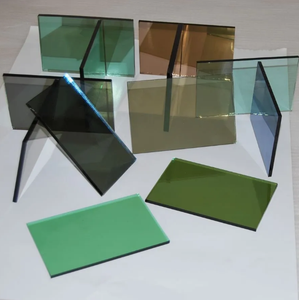
Triple-silver Low-E magnetron sputtering delivers solar heat gain coefficients (SHGC) as low as 0.22 while preserving visible light transmittance (VLT) over 65%.
Warm-Edge Engineering
Thermoplastic Spacers (TPS) and composite stainless-steel warm-edge technology reduce edge U-value thermal bridging by up to 15%.
Architectural Glazing Specifications: From Single Cavity to Triple-Glazed Hollow Units
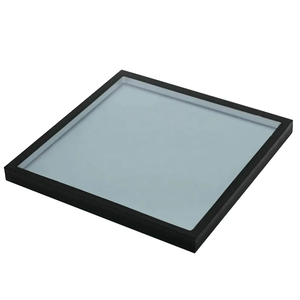
Insulating glass performance is governed by kinetic thermal movement, noble gas concentration (typically 90%+ Argon retention), and precision cavity spacing (ranging from 9A to 18A). When evaluating a China top insulating glass factory, architects and facade engineering directors must evaluate three pivotal manufacturing vectors:
- Substrate Glass Quality & Float Purity: Utilization of optical-grade, low-iron float glass (Fe2O3 content < 0.015%) eliminates nickel sulfide (NiS) inclusions and drastically minimizes spontaneous glass breakage risks in fully tempered applications.
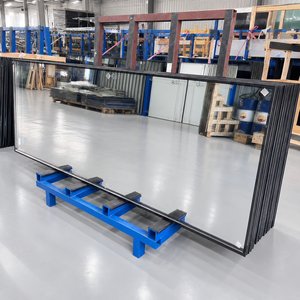
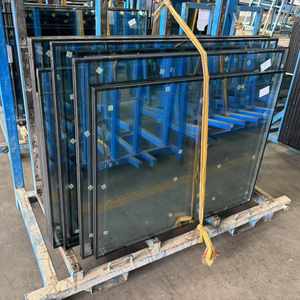
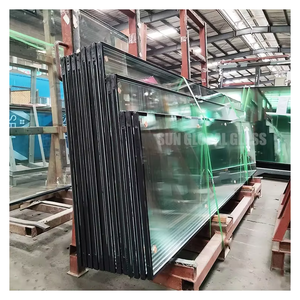
- Automated Argon Filling & Gas Retention: Online dynamic gas filling systems ensure consistent gas concentration across large-span IGUs (up to 3300mm x 12000mm oversized architectural panels), avoiding manual fill air pockets that degrade U-value targets over time.
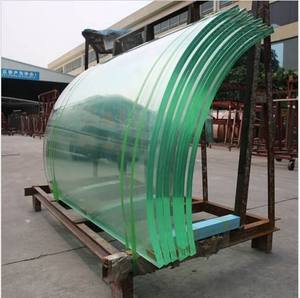
- Structural Laminated Integration: Combining PVB (Polyvinyl Butyral) or SGP (SentryGlas® Interlayer) structural laminates with Low-E insulated cavities yields storm-resistant, soundproof, and anti-intrusion glass assemblies suitable for multi-family podium wraps and high-rise curtain walls.
Future Procurement Trends in Architectural Glazing (2025–2035)
Strategic foresight for developers, general contractors, and procurement executives optimizing building envelope lifecycles.
1. Shift Toward Hybrid Vacuum Insulating Glass (VIG)
Traditional dual-pane argon IGUs are approaching their physical limit in thermal resistance (~U-value 1.1 W/m²K). Future procurement contracts are shifting rapidly toward hybrid VIG units, which combine a vacuum micro-space (0.1mm chamber at 10⁻⁴ Pa) with a traditional Low-E insulated cavity. This architecture yields ultra-thin units achieving U-values as low as 0.4 W/m²K—matching solid insulated masonry walls while preserving optical transparency.
2. Building-Integrated Photovoltaics (BIPV) Hollow Units
Facade procurement is transitioning from passive thermal barrier purchasing to active energy-generating building skin acquisition. Leading Chinese IG producers are integrating Cadmium Telluride (CdTe) and Perovskite solar cells into the outer lite of double-glazed curtain wall panels, turning high-rise commercial facades into decentralized clean power plants without compromising structural wind-load tolerances.
3. Electrochromic & Thermochromic Smart IGUs
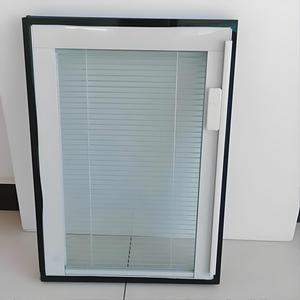
Mechanical motorized blinds (integrated louver glass) are evolving into solid-state electrochromic double glazing. Controlled via building automation systems (BAS) or IoT sensors, electrochromic IGUs automatically modulate solar heat gain in real-time based on sunlight intensity, reducing HVAC cooling loads by up to 30% while eliminating interior mechanical shading hardware.
4. Multi-Asymmetric Acoustic Cavity Formulations
Urban density demands higher acoustic isolation around transit corridors and supermarket mixed-use buildings. Procurement specifications now mandate asymmetric glass thickness combinations (e.g., 8mm outer + 16A + 6mm inner laminated with acoustic PVB) to disrupt resonant sound wave frequencies and achieve STC ratings above 45 dB.
Manufacturing Development & Processing Automation Trends
How top China glass factories are revolutionizing production lines with Industry 4.0 robotics and advanced glass science.
Automated TPS Spacer Application
Replacing traditional aluminum bent spacers, Thermoplastic Spacer (TPS) robotics extrude warm-edge material directly onto the glass substrate. This ensures micro-precise edge sealing, zero corner joint gaps, and optimized argon gas retention over a 30-year operational life.
Soft-Coating Edge De-coating Precision
Magnetron Low-E metallic coatings (silver layers) are vulnerable to atmospheric oxidation if exposed to sealants. Modern processing lines feature laser or rotary diamond grinding head de-coating, stripping Low-E films along the perimeter edge to guarantee direct structural silicone-to-glass adhesion.
Full-Scale Mock-Up & Water Leak Testing
Collaborating with field testing agencies and waterproofing specialists (such as TLS Laboratories and RainBuster standard protocols), top manufacturers execute pre-installation mock-ups subject to dynamic water pressure testing (ASTM E331) before bulk factory roll-out.
Advanced Quality Assurance Matrix: Comparing IGU Formulations
Selecting the optimal glass configuration requires comparing critical physical metrics across clear tempered, single Low-E, triple-silver Low-E, and integrated shade assemblies:
| IGU Configuration | Visible Light Transmittance (VLT) | Solar Heat Gain Coeff. (SHGC) | U-Value (W/m²K, Winter) | Acoustic Rating (STC) |
|---|---|---|---|---|
| 6mm Clear + 12A + 6mm Clear | 78% | 0.70 | 2.70 | 31 dB |
| 6mm Single Low-E + 12A + 6mm Clear | 68% | 0.42 | 1.65 | 32 dB |
| 6mm Triple Low-E + 12Ar + 6mm Laminated | 62% | 0.23 | 1.10 | 40 dB |
| 6mm Low-E + 19A Built-in Blinds + 6mm Clear | 55% (Open) | 0.18 (Closed) | 1.40 | 38 dB |
| Triple Glazed: Low-E + 12Ar + Float + 12Ar + Low-E | 58% | 0.21 | 0.75 | 42 dB |
Why Top Global Contractors & Developers Partner With Us
Decades of fenestration engineering, submittal rigor, and jobsite accountability from pre-construction to long-term service.
Single-Accountability Model
Most window and curtain wall failures occur in the gap between the glass manufacturer, frame fabricator, and field installer. We close that gap. Our engineering team manages submittals, glass specification, delivery sequencing, and field technical support under one unified contract.
Trusted by Tier-1 General Contractors
Founded in 1999, our manufacturing partners and field specialists have completed major multi-family, wrap construction, mixed-use, and commercial curtain wall developments with 7 of the Top 10 U.S. General Contractors. Over 75% of our annual volume stems from repeat developer relationships.
Recessed Opening & Weatherization Mastery
Recessed openings represent the construction industry's most critical waterproofing condition. Our technical teams design custom flashing sequences, coordinate with weather-resistive barrier (WRB) manufacturers, and execute third-party water testing before production lines begin mass output.
Post-Installation Warranty & Service
Our commitment extends beyond factory gate delivery. We maintain dedicated post-installation support teams for punch-list resolution, glass unit replacement, hardware adjustments, and manufacturer warranty fulfillment after building turnover and occupancy.
Frequently Asked Questions for Insulating Glass Procurement
Technical guidance addressing structural design, thermal stress, seal failure prevention, and international shipping protocols.
Ready to Elevate Your Building Envelope Specifications?
Connect with our engineering office to request technical submittals, request custom project mock-ups, or receive comprehensive factory catalog data sheets.
Get Catalog