

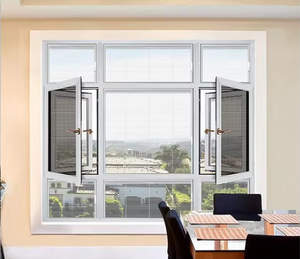
Factory Direct Catalog
Export-Grade Wholesale Architectural Windows
Engineered for multi-family, residential, and commercial developments across North America and Europe. Complete structural, thermal, and hurricane impact compliance.
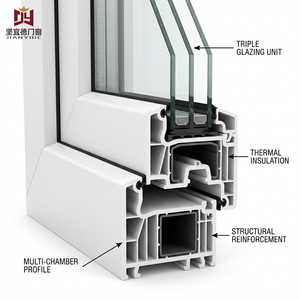
Energy Saving Multi-Chamber UPVC Casement Window Triple Glazed Vinyl
Contact Us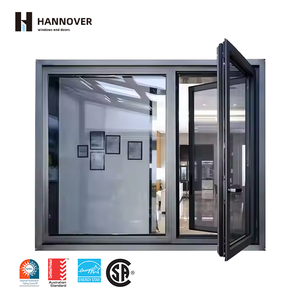
Modern NFRC Aluminum Casement Double/Triple Glazed Tilt and Turn Window
Contact Us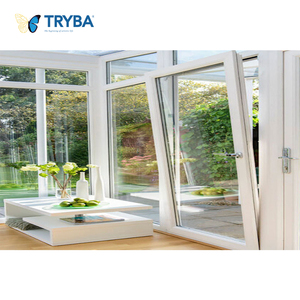
Custom High Quality UPVC German Windows Tilt And Turn Hardware System
Contact Us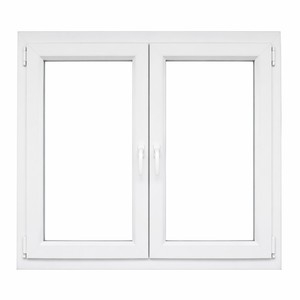
Wholesale High Quality UPVC Windows for Bulk Building Construction Projects
Contact Us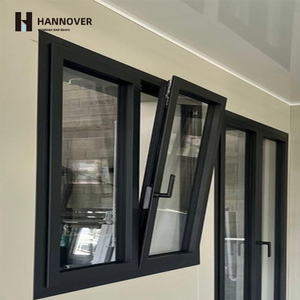
Double Glazed Aluminum Alloy Swing Casement Window Thermal Break System
Contact Us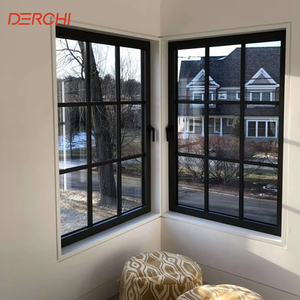
Modern Narrow Frame Commercial Triple Glazed European Style Windows
Contact Us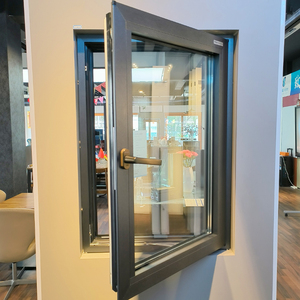
Energy Star Thermal Break Triple Glazed Passive House Aluminum Windows
Contact Us1999
Established Operational History
7 / 10
Top U.S. General Contractors Served
75%+
Long-Term Repeat Client Rate
Top 50
Ranked National Fenestration Enterprise
Integrated Supply & Execution
Closing the Gap Between Overseas Manufacturing and Jobsite Reality
Most commercial window failures do not originate in structural design—they occur in the operational rift between product procurement and field assembly. As leading China wholesale window manufacturers and exporters, we eliminate single-point failure risks through unified single-source accountability.
Pre-Construction Submittals & Shop Drawings
Our engineering team delivers turnkey submittal packages, NFRC energy performance simulations, structural wind-load computations, and customized CAD/BIM shop drawings aligned precisely with local architectural codes (Title 24, IECC, European CE).
Rigorous Mock-Ups & Water Testing
We mandate pre-shipment prototype mock-ups and jobsite water chamber testing (ASTM E1105 / AAMA 501.2). By resolving flashing tolerances before mass production, we guarantee 100% leak-free perimeter integration on recessed conditions.
Floor-by-Floor Sequenced Export Logistics
Bulk shipments are cataloged, packed, and palletized by building elevation and floor sequencing. This minimizes jobsite clutter, prevents glass breakage, reduces field handling costs, and accelerates building enclosure deadlines.
Strategic Whitepaper Analysis
1. Global Wholesale Window Procurement Trends (2025–2030)
The international fenestration supply chain is undergoing a structural paradigm shift. Global general contractors, real estate developers, and commercial builders are rapidly migrating from localized purchasing models to direct-from-manufacturer overseas procurement strategies. Driven by severe domestic labor shortages and surging material costs in western markets, procuring high-performance window systems directly from specialized China manufacturing hubs delivers a 30% to 45% capital expenditure advantage without compromising architectural specs.
However, modern B2B procurement demands far more than basic cost reduction. International buyers are prioritizing three structural pillars:
Zero-Defect Water Penetration Guarantees
Field statistics demonstrate that 80% of building envelope litigation stems from window flashing and perimeter joint leaks. Modern procurement workflows now mandate third-party AAMA/ASTM water chamber testing on full-scale site mock-ups before factory release.
Decarbonization & Embedded Carbon (CBAM)
With stringent energy codes such as California's Title 24, Germany's GEG, and the EU's Carbon Border Adjustment Mechanism (CBAM), exporters must provide verified Environmental Product Declarations (EPDs) alongside advanced low-embodied-carbon aluminum and UPVC profiles.
2. Engineering & Product Development Trends in Architectural Fenestration
Fenestration technology has evolved from static building openings into dynamic, highly engineered thermal and acoustic barriers. When sourcing wholesale windows from China export manufacturers, architectural buyers must understand the core technical vectors driving modern frame and glass design:
| Performance Vector | Legacy Specifications | Modern Export Standard (Passive / High-Efficiency) | Impact on Building Performance |
|---|---|---|---|
| Thermal Insulation | Standard Aluminum / Single Air Space Glazing (U-value ≥ 2.4 W/m²K) | Polyamide (PA66) Thermal Break + Argon-Filled Triple Low-E (U-value ≤ 0.8 W/m²K) | Reduces building HVAC operational energy consumption by up to 40%. Meets Passive House Criteria. |
| Acoustic Attenuation | Single 5mm Glazing (STC 26 - 28 dB) | Laminated PVB / Acoustic Interlayer Asymmetric Triple Glazing (STC 42 - 48 dB) | Critical for urban multi-family developments adjacent to highways, airports, and urban transit corridors. |
| Structural Wind Load | Standard Residential Frames (DP30 - DP45) | Reinforced Architectural Extrusions with Stainless Steel Inserts (DP60 - DP100+) | Resists extreme storm pressures, high-rise wind loads, and hurricane-force wind zones. |
| Frame Profile Aesthetic | Wide, bulky profile sightlines (75mm - 100mm face) | Ultra-slim minimalist frames with hidden drainage & concealed hinges (35mm - 50mm face) | Maximizes natural daylighting (Daylight Factor +25%) and elevates contemporary architectural aesthetics. |
Our manufacturing lines incorporate German-engineered multi-chamber UPVC profiles and polyamide thermal barrier aluminum extrusions. Combined with automated dual-seal warm-edge spacer glass assembly, our windows achieve superior condensation resistance factors (CRF > 72) and eliminate thermal bridging even in harsh sub-zero environments.
3. Quality Assurance & Testing Protocols for Export Operations
To maintain top-tier E-E-A-T credentials and comply with Google Search Quality Standards for structural building safety, every window batch manufactured in our facility undergoes rigorous four-stage quality verification:
- Spectrophotometric Low-E Coating Verification: Ensuring exact Emissivity rating and Solar Heat Gain Coefficient (SHGC) consistency across multi-thousand unit production runs.
- Corner Weld & Mechanical Joint Shear Testing: Structural load failure limits tested to 300% of nominal design pressure to prevent frame racking during sea transport.
- Cyclic Water Spray Chamber Testing: Continuous 15-psi dynamic water jet exposure combined with differential air pressure to verify zero seal breakdown.
- Hardware Endurance Cycling: Multi-point lock systems and tilt-and-turn gear mechanisms lab-tested to 25,000+ continuous opening cycles.
B2B Buyer Knowledge Base
Frequently Asked Questions for Wholesale Window Procurement
Clear, direct answers for architects, project managers, general contractors, and overseas importers.
What certifications do your wholesale window products carry for North American and European imports?
Our export window lines are fully certified to international standards. For North America, we provide NFRC (National Fenestration Rating Council) energy labels, AAMA/WDMA/CSA 101/I.S.2/A440 air-water-structural ratings, and Title 24 compliance packages. For European markets, our products hold CE marking, EN 14351-1 testing documentation, and Passive House Institute (PHI) low-energy component verification.
How does your factory handle custom architectural window dimensions and color matching?
We operate fully automated CNC cutting and machining centers capable of custom sizing down to millimeter precision. Profile finishing options include AkzoNobel electrostatically applied powder coating, fluorocarbon (PVDF) spray for coastal salt-spray resistance, anodizing, and dual-color extrusion (interior wood-grain / exterior architectural bronze or black).
What is the minimum order quantity (MOQ) and standard lead time for wholesale commercial projects?
Our standard wholesale MOQ starts at one 20-foot container (approximately 150–200 standard residential window units or 80–120 heavy-duty commercial casements). Standard production lead time is 20 to 30 calendar days following shop drawing sign-off and color sample approval, with expedited 14-day production slots available for active construction site delays.
How do you ensure window units are not damaged during ocean freight transit?
Export packaging is critical. All window units are protected with removable protective surface film, corner edge guards, moisture-absorbent desiccant packs, high-density EPE foam wrapping, and fully enclosed IPPC ISPM-15 compliant fumigated plywood crates. Crates are engineered to fit standard 40ft HQ containers with zero movement tolerances during sea transport.
Can your engineering team assist with recessed window waterproofing details and flashing designs?
Yes. Recessed openings represent one of construction’s most vulnerable water infiltration points. Our technical team works directly with your project’s Waterproofing Consultant or General Contractor to develop customized aluminum sub-sill pans, self-adhered flashing integration details, and pre-formed corner boots designed to integrate seamlessly with your jobsite’s Weather-Resistant Barrier (WRB).
Why choose thermal break aluminum over standard non-thermal aluminum profiles?
Standard aluminum is a highly conductive material, meaning heat and cold easily transfer through the frame, causing energy loss and interior surface condensation. Thermal break aluminum utilizes a reinforced polyamide (PA66) structural insulator inserted between the interior and exterior aluminum profiles, effectively cutting thermal transfer, dramatically lowering HVAC energy costs, and eliminating interior condensation buildup.