

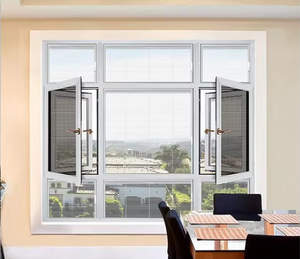
Export-Grade Products
Featured Commercial & Residential Fenestration Systems
Direct factory-manufactured fenestration packages certified to NFRC, Energy Star, CE, and AAMA standards for global commercial developers and general contractors.
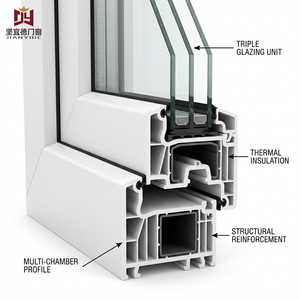
Energy Saving Multi-Chamber UPVC Casement Window | UV Resistant Triple Glazed Vinyl Window For Cold Climate
Contact Us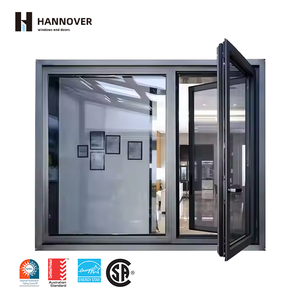
Modern NFRC Aluminum Casement Window Double or Triple Glazed Tilt and Turn Window Custom Sizes for Villa Commercial Projects
Contact Us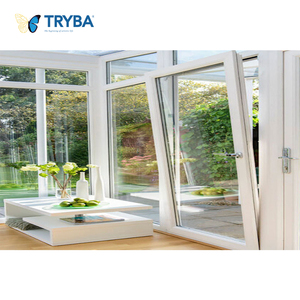
Custom High Quality UPVC German Windows Tilt And Turn Windows
Contact Us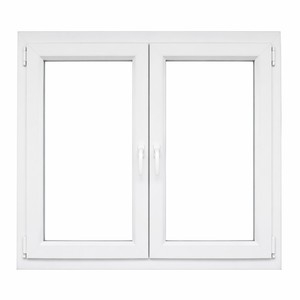
Wholesale High Quality UPVC Windows for Bulk Order Building Material Projects and Commercial Construction Solutions
Contact Us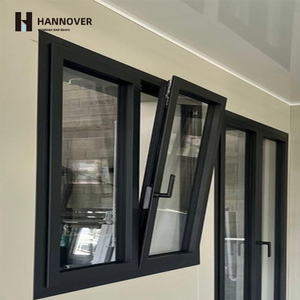
Double Glazed Aluminum Alloy Swing Casement Window Thermal Break System For Energy Efficient Villa Homes
Contact Us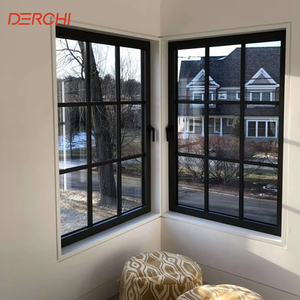
Modern Narrow Frame Commercial Customized Triple Glazed Aluminum European Style Casement windows Black for Residential windows
Contact Us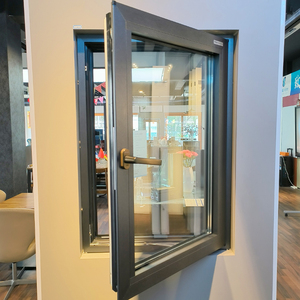
European Style Energy Star Energy Efficient Thermal Break Aluminium Triple Glazed Aluminum Passive House Windows
Contact Us
Single-Source Accountability
China Wholesale Manufacturing Excellence Meets Field-Proven Field Execution
In modern commercial construction—spanning multi-family apartment communities, podium wraps, mixed-use towers, and luxury residential enclaves—the fenestration package represents one of the most critical envelopes for thermal performance, water infiltration prevention, and structural integrity. Historically, procurement directors and general contractors faced a structural operational rift: sourcing products from overseas manufacturers created a communication gap with local installation sub-contractors, resulting in disputed warranties, improper flashing sequence execution, and water penetration failures.
As a leading China Wholesale Window Installation Factory & Exporter operating in technical partnership with established domestic installation networks (exemplified by our heritage since 1999 serving over 7 of the Top 10 U.S. general contractors ranked by NMHC), we eliminate the split-responsibility model. We integrate precision OEM/ODM window fabrication, rigorous pre-construction architectural submittals, field-tested jobsite mock-ups, and post-installation service into a seamless global supply matrix.
The Zero-Leak Integrity Mandate: Closing the Supply-Installation Gap
Most severe envelope leaks occur not from glass failure, but in the interface between the window frame, flashing membrane, and weather-resistive barrier (WRB)—particularly in complex recessed opening details. By providing shop drawings, jobsite mock-up water testing (ASTM E1105 / AAMA 501.2 standards), and specialized installation guidelines tailored to multi-layer flashing sequences, our factory guarantees leak-free fenestration performance from factory floor to building turnover.
Factory Engineering & Submittals
Full architectural submittal packages, CAD shop drawings, Title 24 energy calculations, NFRC thermal performance modeling, and custom structural wind-load engineering for complex commercial elevations.
Pre-Installation Mock-Ups
Complete pre-production window unit assembly with wall-flashing mock-ups, subjected to rigorous field water penetration testing to establish signed-off installation protocols prior to full mass manufacturing.
Advanced Thermal Break Tech
Multi-chamber uPVC profiles and thermal break aluminum extrusion lines featuring Technoform Polyamide (PA66GF25) insulation strips, delivering Passive House U-factors as low as 0.14 BTU/h·ft²·°F.
Strategic Market Analysis
Global Procurement & Development Trends in Export Windows
The global architectural fenestration market is undergoing a paradigm shift driven by stringent municipal carbon-neutrality mandates, updated Energy Star v7.0 performance guidelines, and elevated building code pressures across North America, Europe, and Australia. Commercial real estate developers and general contractors sourcing wholesale window installations from China are adjusting procurement strategies to capitalize on four major technological macro-trends:
1. High-Performance Thermal Break Aluminum & Hybrid Vinyl Systems
Traditional uninsulated aluminum frames are obsolete in modern commercial projects due to high thermal conductivity. The global market has transitioned rapidly toward Polyamide Thermal Break Aluminum Extrusions and Multi-Chamber uPVC (Vinyl) profiles. Premium exports utilize high-density PA66GF25 structural fiberglass-reinforced polyamide strips, establishing thermal isolation between interior and exterior aluminum profiles. This hybrid design delivers the structural strength required for curtain walls and narrow-frame casements while meeting strict IECC and California Title 24 thermal requirements.
2. Low-E Triple Glazing & Argon-Filled Insulated Glass Units (IGU)
As commercial buildings target Net-Zero Energy (NZE) and Passive House certifications, double glazing is increasingly replaced by triple-pane IGUs. Modern export configurations incorporate dual-coated Low-E glass (such as Solarban 60/70 coatings), warm-edge stainless steel or composite spacers, and 90%+ Argon gas fill. This reduces Solar Heat Gain Coefficient (SHGC) down to 0.18-0.23 while retaining high Visible Light Transmittance (VLT), drastically reducing building HVAC loads.
3. Structural Impact Resistance & Anti-Theft Laminated Glass
Extreme climate events and updated coastal building codes require export windows to pass heavy-duty hurricane impact testing. Factory production lines now routinely embed SentryGlas® (SGP) and PVB laminated interlayers into double/triple IGUs. Designed to withstand Design Pressures exceeding DP70 (up to 140 mph wind force equivalent) and large missile impact testing (ASTM E1996), these structural windows eliminate the need for secondary storm shutters in coastal hurricane zones.
4. Pre-Sequenced Containerized Logistics for Modular & Multi-Family Construction
For large-scale podium apartments and student housing developments, site congestion and inventory damage present major cost risks. Enterprise Chinese exporters now offer floor-by-floor containerized packaging and QR-coded palletizing. Windows are manufactured, crated, and loaded in exact erection sequence, allowing installation crews to unload units directly onto designated building stories, accelerating schedule velocity by up to 30%.
Technical Performance Matrix: Export Window Systems Comparison
| System Category | Profile Material | U-Factor (BTU/h·ft²·°F) | SHGC Range | Acoustic Rating (STC) | Target Applications |
|---|---|---|---|---|---|
| Thermal Break Casement | T6063-T5 Aluminum (PA66 Strip) | 0.20 – 0.26 | 0.18 – 0.35 | 38 – 45 dB | Luxury Villas, Multi-Family Podium, Commercial Office |
| German Tilt & Turn | Multi-Chamber High-Impact uPVC | 0.14 – 0.22 | 0.20 – 0.38 | 40 – 48 dB | Passive House, Cold Climate Residential, Urban Apartments |
| Hurricane Impact Casement | Heavy Duty Reinforced Aluminum | 0.24 – 0.30 | 0.22 – 0.32 | 42 – 50 dB | Coastal High-Rise, Florida HVHZ Zones, Commercial Mid-Rise |
| Slim Line Narrow Frame | Minimalist Architectural Aluminum | 0.26 – 0.32 | 0.25 – 0.40 | 35 – 40 dB | Modern Architectural Custom Homes, Boutique Commercial |
Engineering Methodology
Recessed Window Installation & Weatherization Protocol
Recessed window openings—where the window frame is inset behind the exterior cladding line—are widely acknowledged by envelope consultants as the single most vulnerable detail for severe bulk water entry. Improper self-adhered flashing, unsealed sill pans, or poor air-barrier integration lead to interior dry rot and costly structural remediation.
As an experienced manufacturing and exporting authority, our technical department collaborates directly with general contractors and flashing manufacturers (such as Fortifiber and RainBuster) to enforce a standardized 5-Step Waterproofing Flashing Matrix:
Step 1: Sloped Pre-Sill Pan Construction
Installing a positive-sloped, rigid or liquid-applied sill pan with end dams directly over the rough framing sill. This ensures any incidental moisture bypassing the primary exterior seal is directed out onto the drainage plane rather than pooling inside the wall cavity.
Step 2: Dual Membrane Flashing Integration
Applying high-tack butyl or elastomeric self-adhered membrane flashing over the jambs and sill, overlapping the Weather-Resistive Barrier (WRB) in shingle fashion to guarantee continuous liquid-tight integrity.
Step 3: Factory-Designed Nail Fin & Flange Sealing
Window units are configured with heavy-duty structural nail fins or integral masonry flanges. High-grade polyurethane acoustic sealant is applied directly to the backside of the flange prior to mechanical fasteners being driven into structural studs.
Step 4: Controlled Low-Expansion Foam Insulation
Injecting closed-cell, low-expansion polyurethane foam sealant into the perimeter shim space between the window frame and rough opening. This forms a continuous interior thermal barrier and air seal without bowing profile frames.
B2B Sourcing Intelligence
Frequently Asked Questions for Wholesale Window Procurement
Comprehensive technical answers for architects, developers, general contractors, and import buyers.
How does a China wholesale window factory ensure compliance with US and European building codes?
Export-grade manufacturers operate specialized production lines dedicated to international standards. Windows undergo independent testing by accredited laboratories (such as Intertek, NFRC, and TÜV SÜD) to verify compliance with NFRC U-Factor/SHGC ratings, AAMA/WDMA/CSA 101/I.S.2/A440 air/water/structural standards, CE markings for the European Union, and AS2047 certification for Australia. Complete test reports and engineering calculations are provided during the pre-construction submittal phase.
Can the factory accommodate custom architectural sizes, extrusion shapes, and colors?
Yes. As a direct OEM/ODM factory, all window assemblies are fully customizable. Extrusion profiles can be customized for specific wall depths, dual-color powder coating (different interior/exterior finishes), anodized surface treatments, or fluorocarbon (PVDF) coatings resistant to harsh salt-air marine environments. Custom geometric shapes, arch tops, and oversized floor-to-ceiling glass wall systems are designed in-house by our engineering team.
What is the standard lead time for wholesale commercial window export orders?
Typical lead times range from 35 to 50 calendar days depending on project complexity. The timeline includes: 7-10 days for shop drawing review and architectural sign-off; 20-25 days for profile extrusion, thermal break assembly, glass IGU fabrication, and assembly; and 5-7 days for factory quality control, water pressure testing, and container loading. Ocean freight transport time varies by destination port (typically 15-25 days to US West/East Coast ports).
How are window packages packaged to prevent transit damage during sea freight?
Export packages utilize heavy-duty, fully enclosed ISPM-15 compliant fumigated plywood crates or customized steel A-frame glass racks. Glass surfaces are protected with scratch-resistant poly film, corner protectors are installed on frame profile joints, and moisture-absorbing desiccant packs are placed inside sealed plastic wrapping. Crates are engineered to fit standard 40ft HQ shipping containers, allowing forklift unloading at jobsite laydown yards without damage.
What is the difference between uPVC multi-chamber windows and Thermal Break Aluminum windows?
uPVC (vinyl) windows feature multi-chambered hollow profiles made from vinyl polymer, offering outstanding baseline thermal insulation, zero corrosion risk, and lower unit cost—ideal for residential and cold-climate multi-family housing. Thermal Break Aluminum windows utilize high-strength T6063-T5 structural aluminum isolated by a polyamide strip; this provides superior structural strength, supporting larger glass sizes, ultra-narrow frames, and custom architectural powder coatings suited for modern commercial developments.
How does your factory handle jobsite mock-ups and quality assurance testing?
Prior to full production runs, we manufacture full-scale unit mock-ups for architectural sign-off. We perform factory air-infiltration and static/dynamic water penetration testing (simulating heavy storm wind pressure). Furthermore, we coordinate with third-party jobsite inspection agencies to verify mock-up installation flashing details before mass manufacturing container loading begins.
Do you offer post-installation service and hardware replacement warranties?
Yes. All enterprise export packages are backed by comprehensive factory warranties: 10 to 20 years on insulated glass seal integrity, 10 years on profile powder coatings/extrusions, and 5 to 10 years on operating hardware systems (utilizing premium brands such as German Siegenia, Roto, or custom heavy-duty stainless hardware). Replacement components and spare hardware kits are shipped standard with every bulk order container.