

High-Performance Low-E Architectural Windows & Glass Systems
Direct OEM manufacturing and engineering solutions designed for Title 24, Energy Star, NFRC, and Passive House compliance worldwide.
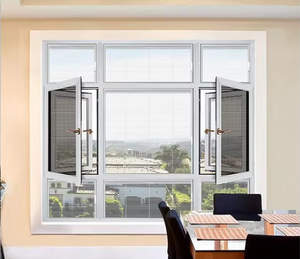
High Quality Modern Design Large Casement Windows Custom Hurricane Impact Anti-Theft Aluminum Glass House Windows Low Price USA
Send an Inquiry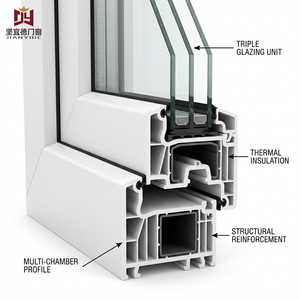
Energy Saving Multi-Chamber UPVC Casement Window | UV Resistant Triple Glazed Vinyl Window For Cold Climate
Send an Inquiry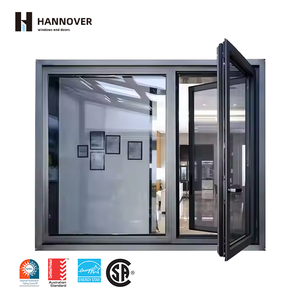
Modern NFRC Aluminum Casement Window Double or Triple Glazed Tilt and Turn Window Custom Sizes for Villa Commercial Projects
Send an Inquiry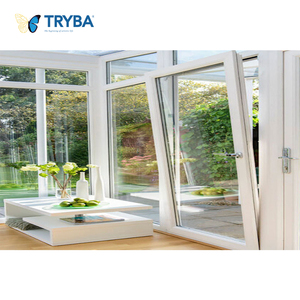
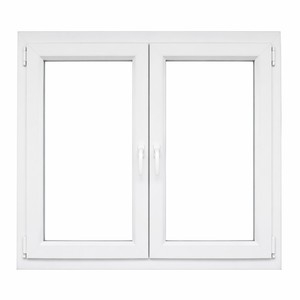
Wholesale High Quality UPVC Windows for Bulk Order Building Material Projects and Commercial Construction Solutions
Send an Inquiry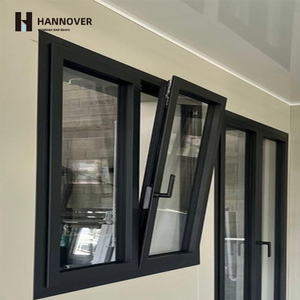
Double Glazed Aluminum Alloy Swing Casement Window Thermal Break System For Energy Efficient Villa Homes
Send an Inquiry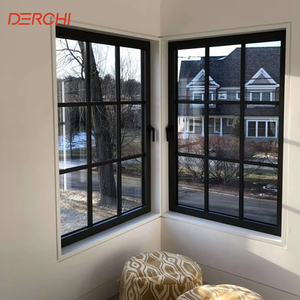
Modern Narrow Frame Commercial Customized Triple Glazed Aluminum European Style Casement windows Black for Residential windows
Send an Inquiry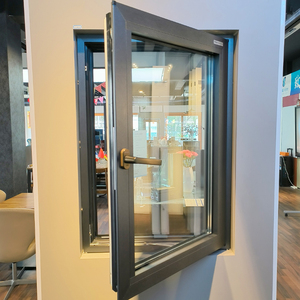
European Style Energy Star Energy Efficient Thermal Break Aluminium Triple Glazed Aluminum Passive House Windows
Send an InquiryArchitectural Low-E Glass Performance Framework
Understanding Magnetron Sputtering Vacuum Deposition (MSVD), Spectrally Selective Coatings, and Thermal Transmittance Optimization.
Single vs Double vs Triple Silver Low-E
Microscopic nanometer silver layers dictate spectrally selective glass behavior. OEM manufacturing leverages advanced Magnetron Sputtering Vacuum Deposition (MSVD) soft-coat technology to reflect infrared wavelengths while maintaining optical clarity.
- Single Silver (Ag): Standard commercial applications requiring balanced Light-to-Solar Gain (LSG).
- Double Silver (Ag2): High-efficiency curtain walls providing SHGC values below 0.28 with high VLT.
- Triple Silver (Ag3): Maximum solar heat blockage (SHGC < 0.22) maintaining >65% visible light transmittance.
Thermal Performance Dynamics
Evaluating overall thermal performance requires optimizing the system's U-Factor, Solar Heat Gain Coefficient (SHGC), and Condensation Resistance Index across varied climate zones.
- U-Factor Engineering: Reduced from 0.48 (standard float) to <0.12 BTU/h·ft²·°F in noble-gas filled triple-pane assemblies.
- Argon/Krypton Gas Retention: 90%+ dual-sealed insulated glass units (IGU) utilizing polyisobutylene primary seals.
- Warm-Edge Spacer Integration: Thermoplastic Spacers (TPS) and stainless steel hybrid spacers eliminating perimeter cold-bridging.
Structural & Safety Enhancements
OEM fabrication combines thermal control coatings with structural safety enhancements for extreme weather, acoustic dampening, and high-occupancy commercial structures.
- Laminated Hurricane Impact: SentryGlas® & PVB interlayers meeting Florida HVHZ and ASTM E1996 standards.
- Acoustic Mitigation: STC values exceeding 42 dB using asymmetrical glass thickness combinations.
- Thermal Stress Analysis: Automated heat-soak testing (HST) preventing spontaneous nickel-sulfide (NiS) inclusion breakage.
| Glazing Specification Criteria | Standard Double Pane Float | OEM Double Silver Low-E (Argon) | OEM Triple Silver Low-E (Argon) | OEM Passive House Triple Glazed (Krypton) |
|---|---|---|---|---|
| U-Value (W/m²K) / (U-Factor) | 2.8 (0.49) | 1.3 (0.23) | 1.1 (0.19) | 0.6 (0.10) |
| Solar Heat Gain Coefficient (SHGC) | 0.72 | 0.38 | 0.22 | 0.28 |
| Visible Light Transmittance (VLT) | 81% | 70% | 64% | 68% |
| Condensation Resistance Index (CR) | 35 | 62 | 72 | 85+ |
| Ideal Application Climate | Mild / Non-Regulated | Temperate Mixed Heating/Cooling | Severe Cooling Dominated (Zone 1-3) | Severe Cold Dominated (Zone 5-8) |
Future B2B Procurement Trends in Architectural Fenestration
Strategic shift towards net-zero decarbonization, standardized compliance, and automated supply chain integration in multi-family and commercial developments.
1. Decarbonization & Embodied Carbon Regulations
Global developers are enforcing Environmental Product Declarations (EPDs) and Low-Embodied Carbon glass manufacturing. OEM partners must demonstrate recycled cullet incorporation and energy-efficient sputtering lines to meet LEED v4.1 and zero-carbon building benchmarks.
2. Strict Regulatory Compliance (Title 24 & Energy Star 7.0)
Building codes across North America and Europe are drastically reducing allowable U-Factors and SHGC metrics. Procurement managers are transitioning away from standard thermal breaks toward structural fiberglass and multi-chamber polyamide thermal barriers with integrated Low-E coatings.
3. Vacuum Insulating Glass (VIG) & Dynamic Assemblies
The next decade will see rapid adoption of hybrid Vacuum Insulating Glass (VIG) paired with double-silver Low-E coatings, achieving ultra-thin profiles with thermal resistance matching solid masonry walls (U-factors < 0.06 BTU/h·ft²·°F).
Key Technological Trends Shaping Glass Manufacturing
How state-of-the-art robotic assembly, automated quality assurance, and advanced surface functionalization are defining next-generation glass products.
Fully Automated IGU Line Production
Eliminating human error in secondary sealing, edge-deletion of soft-coat Low-E layers, and automated online laser inspection for glass distortion, dust, and coating defects ensure 100% compliance with ASTM C1376 standards.
Advanced Surface Coatings & Self-Cleaning Glass
Integration of hydrophobic and photocatalytic Titanium Dioxide (TiO2) coatings on exterior surfaces paired with interior Low-E soft coats, drastically reducing commercial glass maintenance costs for high-rise residential and commercial towers.
Structural Silicone Glazing (SSG) Optimization
Emerging structural glass facades utilize specialized OEM Low-E glass with customized edge-deletion zones tailored specifically for structural silicone adhesion, ensuring 50-year building envelope durability.
Proven Engineering Leadership Since 1999
For over two decades, our single-team manufacturing and contracting methodology has removed the critical gap between product fabrication and field installation performance. Trusted by 7 of the Top 10 U.S. General Contractors listed by the National Multifamily Housing Council (NMHC), we deliver start-to-finish accountability.

Frequently Asked Questions by OEM & B2B Buyers
Essential answers regarding specification support, thermal performance validation, custom manufacturing, and global project delivery.
What primary custom OEM Low-E options do you manufacture for large-scale developments?
We produce a wide spectrum of Low-E glass configurations including Single, Double, and Triple Silver MSVD soft coatings on clear, low-iron, tint-body, or laminated substrates. Glass thickness ranges from 3mm to 12mm per lite, customized to project-specific acoustic, solar control, and structural wind-load requirements.
How do you guarantee leak-free performance on challenging recessed window installations?
Recessed openings require a verified system approach. We build custom jobsite mock-ups with the window manufacturer, flashing vendor, and third-party testing agency. Once water penetration testing is successfully completed under ASTM E1105 standards, our supervised crews replicate the documented flashing sequence across every unit.
Are your Low-E glass and window systems certified for North American and European codes?
Yes. Our glass assemblies undergo testing to meet NFRC (National Fenestration Rating Council), Energy Star 7.0, AAMA/WDMA/CSA 101/I.S.2/A440 standards, Title 24 California energy compliance, and CE / Passive House PHYUS criteria for international export projects.
Can you provide specialized OEM submittals for architectural engineering teams?
Absolutey. Our pre-construction division generates comprehensive submittal packages including architectural shop drawings, glass performance calculations (using LBNL WINDOW software), structural thermal stress analysis, and structural silicone compatibility reports.
What is the typical lead time for custom OEM Low-E glass window orders?
Standard OEM production lead times range between 4 to 6 weeks following final shop drawing sign-off and mock-up approval. Phased batch deliveries are fully coordinated with general contractor master construction schedules to optimize crane time and floor-by-floor staging.
How does working with an integrated dealer-installer reduce project risk?
Eliminating the gap between product suppliers and third-party labor contractors ensures single-source accountability. If a glazing seal fails or an installation tolerance is off, our in-house team resolves the issue directly without back-charges, delays, or liability disputes.
Ready to Specify Custom OEM Low-E Glass for Your Next Project?
Submit your architectural drawings, window schedules, or performance criteria today. Our engineering and estimating team will provide a rapid technical review and commercial quote.
Send an Inquiry