

Featured OEM/ODM Architectural Window Systems
Engineered for extreme structural load performance, thermal efficiency, and precision architectural compliance.
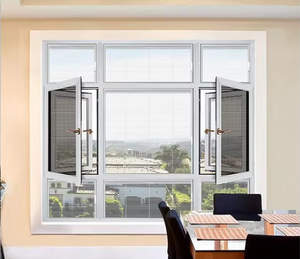
High Quality Modern Design Large Casement Windows Custom Hurricane Impact Anti-Theft Aluminum Glass House Windows Low Price USA
Get Catalog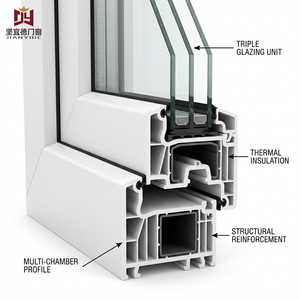
Energy Saving Multi-Chamber UPVC Casement Window | UV Resistant Triple Glazed Vinyl Window For Cold Climate
Get Catalog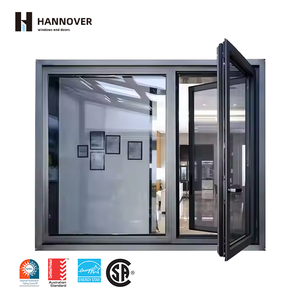
Modern NFRC Aluminum Casement Window Double or Triple Glazed Tilt and Turn Window Custom Sizes for Villa Commercial Projects
Get Catalog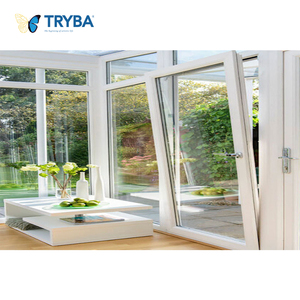
Custom High Quality UPVC German Windows Tilt And Turn Windows
Get Catalog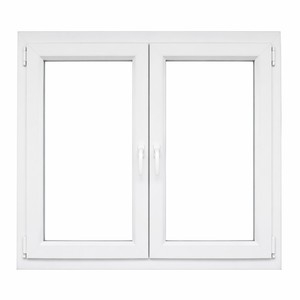
Wholesale High Quality UPVC Windows for Bulk Order Building Material Projects and Commercial Construction Solutions
Get Catalog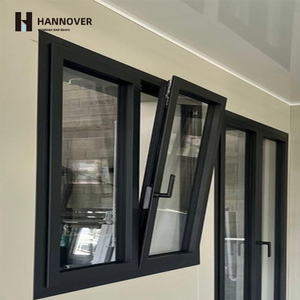
Double Glazed Aluminum Alloy Swing Casement Window Thermal Break System For Energy Efficient Villa Homes
Get Catalog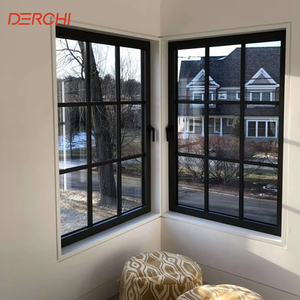
Modern Narrow Frame Commercial Customized Triple Glazed Aluminum European Style Casement windows Black for Residential windows
Get Catalog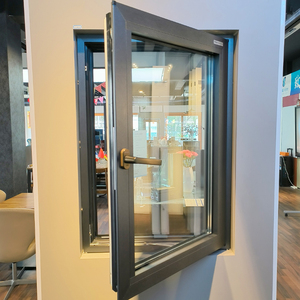
European Style Energy Star Energy Efficient Thermal Break Aluminium Triple Glazed Aluminum Passive House Windows
Get CatalogIntegrated OEM/ODM Factory Advantages & Capabilities
Bridging the gap between raw extrusion manufacturing and fault-free jobsite delivery.
Single-Source Accountability
Most fenestration failures occur in the disconnect between factory fabrication and jobsite execution. Our integrated OEM/ODM workflow manages custom profile extrusion, glass processing, pre-construction submittals, jobsite mock-ups, and long-term field support under one single accountable framework.
Advanced Material Science
Utilizing high-density techno-polymer thermal breaks (PA66GF25), multi-chamber lead-free uPVC vinyl compounds, and structural silicone glazing (SSG), our factory engineers optimize structural deflection limits while achieving Passive House U-factor standards down to 0.14 BTU/hr·ft²·°F.
Rigorous ASTM & NFRC Testing
Every fenestration design undergoes extensive chamber testing for air infiltration (ASTM E283), water penetration resistance (ASTM E331 at pressure differentials exceeding 720 Pa), structural load resistance (ASTM E330), and hurricane impact resistance (TAS 201/202/203).
Technical Guide: Sourcing OEM/ODM Architectural Windows from Global Factories
In modern commercial and high-density residential construction, fenestration systems are no longer passive aesthetic envelopes. Windows have evolved into active structural, acoustic, and thermal performance barriers. Selecting the right OEM/ODM (Original Equipment / Original Design Manufacturing) window factory requires deep technical scrutiny of extrusions, glass unit sealing, hardware durability, and jobsite waterproofing integration.
Information Gain Insight: Selecting an architectural window manufacturer solely based on unit price often leads to hidden costs in air/water leakage and installation delays. A true OEM/ODM partner provides complete submittal packages, shop drawings, ASTM testing verification, and custom tooling capabilities for job-specific architectural details.
1. Structural Frame Materials: Thermally Broken Aluminum vs. Multi-Chamber UPVC
When engineering fenestration for multi-family podiums, commercial curtain walls, or high-end residential estates, material selection dictates structural span and thermal longevity:
Polyamide Thermally Broken Aluminum: High-rise commercial applications demand high structural strength (Design Pressure / DP ratings above 50 PSF). OEM/ODM aluminum factories utilize extruded 6063-T5 or 6063-T6 aluminum profiles coupled with 24mm to 34mm Glass-Fiber Reinforced Polyamide (PA66GF25) strips. This mechanical separation eliminates the conductive path between interior and exterior aluminum profiles, stopping thermal bridging while maintaining structural rigidity for floor-to-ceiling glass assemblies.
Multi-Chamber Vinyl (uPVC): For high-density residential developments in cold climates, engineered uPVC profiles feature 5 to 7 internal insulation chambers. Formulated with high-impact titanium dioxide ($TiO_2$) UV stabilizers, these systems resist thermal degradation and warping under solar radiation while achieving class-leading frame U-factors ($U_f \le 0.18 \text{ BTU/hr}\cdot\text{ft}^2\cdot^\circ\text{F}$).
| Performance Benchmark | Thermally Broken Aluminum (OEM) | Multi-Chamber UPVC (ODM) | Passive House Standard (Target) |
|---|---|---|---|
| Frame Thermal Transmittance ($U_f$) | 0.22 - 0.28 BTU/hr·ft²·°F | 0.15 - 0.20 BTU/hr·ft²·°F | ≤ 0.14 BTU/hr·ft²·°F |
| Max Structural Wind Load (DP) | DP50 to DP100+ (High-Rise) | DP35 to DP60 (Mid-Rise) | Project Specific |
| Acoustic Isolation (STC Rating) | STC 38 - 45 (Laminated IGU) | STC 32 - 40 (Double/Triple) | STC 40+ |
| Recyclability & EPD Footprint | 100% Recyclable Aluminum Core | Multi-Cycle Closed Loop Vinyl | Low Embodied Carbon EPD |
2. Advanced Insulated Glass Unit (IGU) Architecture
The glass packet represents over 80% of a window's physical area. Premium OEM factories implement fully automated, climate-controlled IGU production lines capable of assembling double-glazed, triple-glazed, and quadruple-glazed units with double-seal technology (Primary PIB butyl seal + Secondary structural silicone or polyurethane seal).
Magnetron Sputtered Low-E Coatings: Soft-coat Low-E (Low-Emissivity) glass utilizes micro-layers of silver to reflect far-infrared energy. Double-silver and triple-silver Low-E stacks allow visible light transmission (VLT > 65%) while selectively blocking solar heat gain, reducing the Solar Heat Gain Coefficient (SHGC) down to 0.21 for sun-exposed southern facades.
Noble Gas & Warm-Edge Spacer Integration: Air gaps inside IGUs are purged and filled with 90%+ Argon or Krypton gas, dramatically slowing convective heat transfer. Furthermore, replacing traditional cold aluminum glass spacers with stainless steel composite or thermoplastic warm-edge spacers (TPS) prevents perimeter condensation and thermal stress cracking.
Acoustic Engineering Note: To reduce low-frequency traffic or airport noise, OEM factories incorporate asymmetrical glass thickness (e.g., 6mm outer pane + 12mm Argon cavity + 8.38mm interior acoustic PVB laminated pane), breaking resonance patterns to achieve STC ratings above 42 dB.
Future Sourcing Trends in Architectural Window Manufacturing
The global market for architectural windows is experiencing a paradigm shift driven by stringent building energy codes (such as California Title 24, NYC Local Law 97, and European EPBD regulations) and advanced off-site prefabricated construction.
1. Building-Integrated Photovoltaics (BIPV) & Electrochromic Dynamic Glass
Next-generation ODM factories are embedding cadmium telluride (CdTe) or perovskite solar cells directly into spandrel and clear window glazing. These BIPV systems turn the building facade into a clean power generator. Simultaneously, electronically tintable smart glass (electrochromic) adjusts light transmission in real-time based on solar sensors, eliminating mechanical blinds and lowering HVAC energy demand by up to 20%.
2. Low Embodied Carbon & Circular Economy Manufacturing
Architects and developers increasingly require Environmental Product Declarations (EPDs) during procurement submittals. Window factories are responding by utilizing low-carbon aluminum smelted with renewable hydro-energy, increasing post-consumer recycled aluminum content above 75%, and adopting bio-attributed PVC resins to minimize total scope 1-3 greenhouse gas emissions.
3. BIM Level 2/3 Digital Twins & Industrialized Off-Site Assembly
Modern architectural projects demand flawless digital integration. OEM factories now deliver project-specific BIM (Building Information Modeling) Revit files containing embedded thermal, acoustic, and structural metadata. Windows are engineered with integrated nail-flanges, sub-frames, and unitized clip systems, enabling seamless installation into prefabricated wall panels off-site to accelerate construction schedules.
Frequently Asked Questions for OEM/ODM Procurement
Key technical considerations for architects, developers, and general contractors.
Standard lead times for custom aluminum extrusion tooling range from 15 to 25 days. Once dies are approved, initial sample production takes 10 to 14 days. Full-scale project manufacturing, including automated IGU assembly and powder coating/anodizing, typically spans 35 to 45 days, depending on project scale and custom hardware specification.
Recessed window openings are one of the most demanding waterproofing details in building envelope design. Our factory engineering team works directly with flashing manufacturers to design project-specific sill pans, self-adhered membrane interfaces, and head deflectors. These assemblies are validated through physical jobsite mock-ups and field water testing (ASTM E1105) prior to mass fabrication.
Complete submittal packages include NFRC energy performance ratings (U-factor, SHGC, VT, air leakage), AAMA/WDMA/CSA 101/I.S.2/A440 structural performance certificates, hurricane impact testing reports (TAS 201/202/203), mill test reports (MTR) for aluminum alloys, and multi-year factory warranty documentation covering paint finishes, hardware, and IGU seal failure.
Yes. Our ODM engineering department designs dedicated Passive House window lines featuring thermal-break foam inserts (AEROGEL or expanded polyurethane), triple/quadruple glazed IGU combinations with warm-edge spacers, and triple-continuous EPDM weather-stripping to achieve overall window U-factors below 0.14 BTU/hr·ft²·°F (0.80 W/m²K).
All IGUs are equipped with protective polymer corner guards, cork/rubber separation pads, and shrink-wrapped protection film. Units are packed into heavy-duty, steel-reinforced export wooden crates designed for ocean container shipping. High-altitude shipments incorporate pressure equalizer tubes (capillary tubes) to prevent glass implosion or seal rupture caused by barometric pressure changes.
Ready to Partner with a Leading Window OEM/ODM Factory?
Send us your architectural drawings, window schedules, or specifications. Our structural engineering and estimating teams will provide full submittal proposals and factory-direct pricing within 48 hours.
Get Catalog