

Architectural Tempered Glass & Window Systems
Engineered for high thermal efficiency, NFRC & Energy Star compliance, structural wind-load resistance, and long-term weatherization in multi-family and commercial developments.
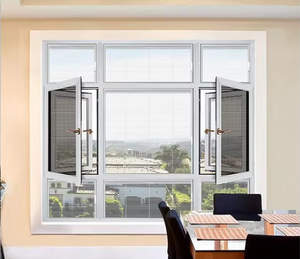
High Quality Modern Design Large Casement Windows Custom Hurricane Impact Anti-Theft Aluminum Glass House Windows Low Price USA
Inquire Now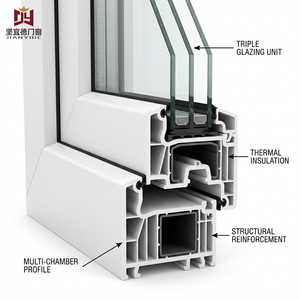
Energy Saving Multi-Chamber UPVC Casement Window | UV Resistant Triple Glazed Vinyl Window For Cold Climate
Inquire Now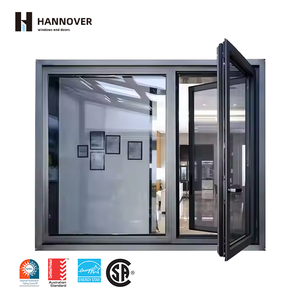
Modern NFRC Aluminum Casement Window Double or Triple Glazed Tilt and Turn Window Custom Sizes for Villa Commercial Projects
Inquire Now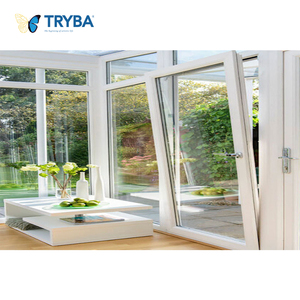
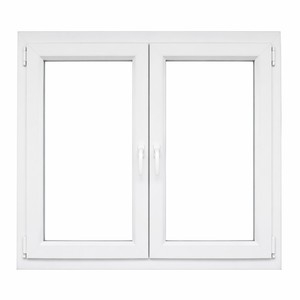
Wholesale High Quality UPVC Windows for Bulk Order Building Material Projects and Commercial Construction Solutions
Inquire Now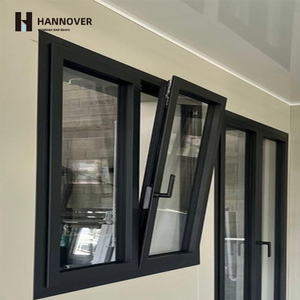
Double Glazed Aluminum Alloy Swing Casement Window Thermal Break System For Energy Efficient Villa Homes
Inquire Now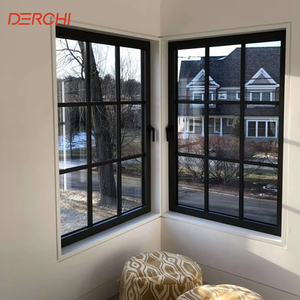
Modern Narrow Frame Commercial Customized Triple Glazed Aluminum European Style Casement windows Black for Residential windows
Inquire Now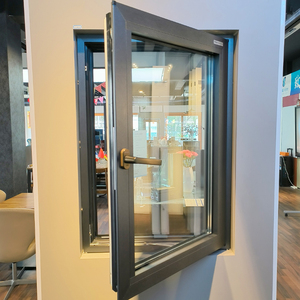
European Style Energy Star Energy Efficient Thermal Break Aluminium Triple Glazed Aluminum Passive House Windows
Inquire NowEnd-to-End Field Accountability: Bridging Sourcing & Installation
Most critical envelope failures stem from the disconnect between off-site glass manufacturing and on-site field installation. Our integrated operational model eliminates liability gaps from pre-construction to post-occupancy.
Architectural Submittals & Engineering
Complete plan reviews, opening take-offs, custom shop drawings, Title 24 compliance verification, NFRC thermal calculations, and long-lead procurement planning tailored to specification sections.
Pre-Installation Mock-Ups & Water Testing
On-site physical mock-up assembly with window manufacturers, flashing suppliers, and third-party testing agencies (ASTM E1105) to verify water tightness before production runs.
Recessed Opening Waterproofing Mastery
Specialized field protocols for complex recessed window conditions—widely recognized as the industry's highest leak risk—combining sill pans, liquid membranes, and supervised installation crews.
Architectural Whitepaper: Evaluating Tempered Safety Glass Sourcing in 2025
In modern commercial and high-density multi-family construction, selection of fully tempered glass (FTG) and heat-strengthened glass (HSG) assemblies directly influences structural integrity, occupant safety, thermal efficiency, and overall building envelope longevity. Tempered glass undergoes a precisely controlled thermal treatment process—heating float glass past its softening point (~620°C to 650°C) followed by rapid air quenching. This introduces high surface compression stress (exceeding 10,000 psi / 69 MPa in accordance with ASTM C1048), creating a material four to five times stronger than standard annealed glass.
When specified within high-performance insulated glass units (IGUs) incorporating low-emissivity (Low-E) pyrolytic or magnetron sputter vacuum deposition (MSVD) soft coatings, argon gas fills, and warm-edge spacer technology, tempered glass becomes the primary thermal and safety barrier for modern architectural facades.
1. Technical Quality Evaluation Matrix: Sourcing Standards
When auditing top tempered glass manufacturers and suppliers, procurement teams must evaluate manufacturers across four technical vectors to eliminate field performance risks:
- Nickel Sulfide (NiS) Inclusion Mitigation & Heat Soak Testing (HST): Spontaneous breakage caused by phase transformation of microscopic NiS inclusions remains a critical risk in fully tempered glass. Leading global suppliers must provide certified Heat Soak Testing conforming to EN 14179-1, heating glass to 290°C ± 10°C to force premature failure of contaminated panes inside the factory rather than on high-rise curtain walls.
- Roller Wave & Edge Dip Optical Distortion Control: Thermal processing furnace rollers can induce localized optical distortion. Premium suppliers utilize dynamic convection heating chambers with automatic optical scanner feedback to keep roller wave distortion under 0.05 mm across 300 mm spans, preserving pristine exterior reflection.
- Anisotropy & Strain Pattern Minimization: Photopolarimetric inspection systems ensure uniform quenching airflow, preventing visible iridescent strain patterns ("leopard spots") when exterior glass is viewed under polarized daylight.
- Edge Processing & Structural Silicone Compatibility: Structural Glazing (SSG) applications require polished, flat-ground edges (C-grind) with strict edge-strength values to ensure secondary seals (polysulfide or silicone) form durable chemical bonds immune to UV degradation and moisture vapor transmission.
2. Comparative Industry Benchmarks: Top Tempered Glass Supply Configurations
The matrix below compares key technical parameters across primary architectural glass configurations commonly utilized in commercial and residential developments:
| Glass Configuration | Visible Light Transmittance (VLT) | Solar Heat Gain Coefficient (SHGC) | U-Factor (Btu/h·ft²·°F) | Impact Rating Standard | Primary Application |
|---|---|---|---|---|---|
| Double-Glazed Low-E Tempered (6mm + 12A + 6mm) | 68% - 74% | 0.38 - 0.42 | 0.26 - 0.28 | ANSI Z97.1 / CPSC Cat II | Multi-Family Residential Windows & Sliding Patio Doors |
| Triple-Glazed Passive House IGU (4mm + 12A + 4mm + 12A + 4mm) | 58% - 65% | 0.22 - 0.28 | 0.12 - 0.15 | EN 12150 / Passive House Certified | Cold Climate Commercial Envelopes & Luxury Villas |
| Laminated Tempered Hurricane Impact (6mm Tempered + 1.52 SGP + 6mm) | 62% - 70% | 0.32 - 0.36 | 0.24 - 0.26 | ASTM E1996 / Florida Product Approval | Coastal High-Rise & Hurricane Zone Facades |
| Acoustic Laminated Double IGU (8mm Tempered + PVB + 6mm Low-E) | 60% - 66% | 0.30 - 0.35 | 0.22 - 0.25 | STC 42 - 45 Rating | Urban Mixed-Use & Hotel Envelope Packages |
3. Product Development Trends: Next-Generation Architectural Glass
The global fenestration and architectural glass industry is undergoing rapid technological evolution driven by stringent energy codes (such as California Title 24, IECC 2024, and European EPBD directives) alongside embodied carbon limits:
- Vacuum Insulated Glass (VIG) Hybrid Integration: By replacing the conventional gas-filled thermal cavity with a 0.2mm vacuum space between two tempered glass sheets, VIG units achieve thermal insulation equivalent to solid brick walls (U-factors as low as 0.06 Btu/h·ft²·°F) in lightweight, ultra-thin profiles.
- Electrochromic & Dynamic Solar Control Glass: Smart glass technology electronically adjusts tint based on real-time solar irradiance, dynamically controlling SHGC between 0.09 and 0.41 to eliminate motorized shading systems and dramatically reduce HVAC peak loading.
- Ultra-Clear Low-Iron Float Substrates: Sourcing low-iron float glass (ferric oxide content <0.015%) for tempering eliminates the characteristic green tint of standard float glass, dramatically improving color neutrality and natural daylight harvesting.
- Integrated Photovoltaic Fenestration (BIPV): Building-Integrated Photovoltaics embed micro-thin solar cells into laminated tempered glass vision and spandrel zones, turning the building envelope into an active clean energy generator without compromising structural integrity.
4. Future Sourcing & Procurement Trends (2025–2030)
Global logistics volatile costs, localized decarbonization mandates, and supply chain reshoring have fundamentally altered how General Contractors, Developers, and Glazing Subcontractors procure bulk glass and window systems:
A. Single-Source Accountability Model: Historically, developers purchased raw glass panels from overseas fabricators and contracted local installers separately. When leaks or seal failures occurred, suppliers blamed installers, while installers blamed defective materials. Future-proof procurement favors single-source firms that execute procurement, delivery sequencing, flashing integration, and field installation under a unified warranty scope.
B. Environmental Product Declarations (EPDs) & Embodied Carbon Thresholds: Whole-building Life Cycle Assessments (LCA) now mandate EPD transparency. Tempered glass fabricators using electric-powered recycling furnaces (utilizing up to 40% recycled cullet) hold a distinct competitive edge in winning LEED v4.1 and net-zero energy project bids.
C. Jobsite-Sequenced Floor-by-Floor Logistics: Staging massive window shipments on constrained urban job sites creates high risk for glass damage, seal contamination, and labor downtime. Advanced suppliers now utilize floor-by-floor crate sequencing and RFID tracking, aligning glass deliveries precisely with framing schedules.
Frequently Asked Questions by Technical Buyers
Direct answers to critical questions regarding specification compliance, thermal stress performance, mock-up verification, and warranty management.
What distinguishes fully tempered glass from heat-strengthened glass?
Fully tempered glass has a surface compression of 10,000 psi or greater and fractures into tiny cubical fragments upon impact (conforming to ANSI Z97.1 safety standards). Heat-strengthened glass has a surface compression between 3,500 and 7,500 psi, offers approximately twice the thermal stress resistance of annealed glass, and breaks in larger radial shards, remaining in the opening when laminated.
Why is Heat Soak Testing (HST) critical for commercial high-rise projects?
Heat Soak Testing accelerates the potential expansion of Nickel Sulfide (NiS) contaminants present in float glass raw materials. Subjecting tempered panes to a controlled 290°C baking cycle forces unstable panes to break inside the factory chamber, effectively preventing spontaneous field breakage on high-rise curtain walls.
How does an integrated supplier manage recessed window opening details?
Rec recessed window openings represent one of the architectural envelope's highest leak risk conditions. A single-source contractor builds project-specific flashing sequences directly with flashing manufacturers, validates the detail through field mock-up water testing (ASTM E1105), and supervises dedicated installation crews to ensure 100% repeatability across every opening.
What engineering documentation is supplied during the architectural submittal phase?
Comprehensive submittal packages include dimensioned shop drawings, structural wind-load calculation reports, NFRC thermal performance certificates (U-factor, SHGC, VLT), acoustic test reports (STC/OITC), flashing sequence details, and manufacturer warranty documentation mapped to CSI Division 08 specifications.
How do triple-glazed tempered window packages support Title 24 & Energy Star standards?
Triple-glazed units feature two Low-E coated surface layers, dual argon gas-filled cavities, and warm-edge non-metallic spacers. This configuration reduces window U-factors down to 0.15–0.18, effortlessly exceeding California Title 24 prescriptive requirements and Energy Star Northern Zone standards.
What warranty coverage protects commercial window and patio door packages?
Complete project coverage typically incorporates a 10-year warranty on insulated glass unit seal integrity, 10-year coverage on aluminum/UPVC frame finish and structural extrusions, 1-to-5 year coverage on operating hardware, and a comprehensive 1-to-2 year single-source warranty covering installation labor and field waterproofing.
Partner with a Proven Architectural Glass & Fenestration Specialist
Submit your architectural drawings, window schedules, or performance specifications. Our technical team will deliver complete submittals, cost estimates, and waterproofing mock-up strategies for your upcoming multi-family or commercial project.
Inquire Now