Commercial Glazing Factories & Suppliers Serving Seattle

Engineered Fenestration Packages, NFRC-Certified Thermal Curtain Walls & Heavy-Duty Architectural Glass Built for Pacific Northwest Microclimates

Factory-Direct Architectural Systems

Commercial Window & Glazing Product Line

Precision-engineered fenestration solutions tested to AAMA, NFRC, and ASTM standards for Seattle's commercial, multi-family, and mixed-use developments.

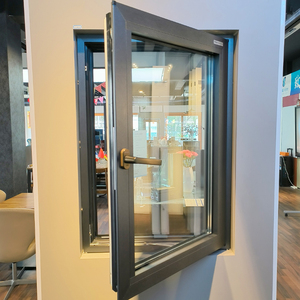
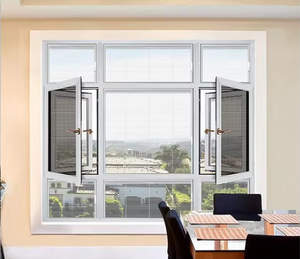
High Quality Modern Design Large Casement Windows Custom Hurricane Impact Anti-Theft Aluminum Glass House Windows Low Price USA

High Quality Modern Design Large Casement Windows Custom Hurricane Impact Anti-Theft Aluminum Glass House Windows Low Price USA

Heavy-duty structural aluminum casement units featuring reinforced multi-point locking systems, high-impact laminated glazing, and ultra-low air infiltration engineered for high-wind coastal exposure.
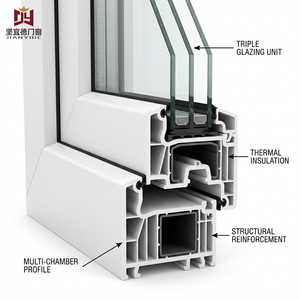
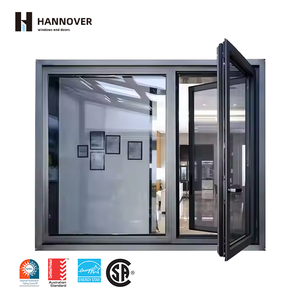
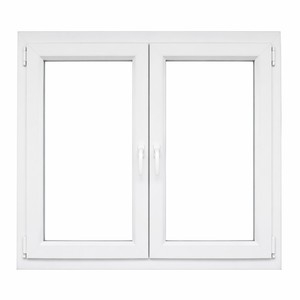
Energy Saving Multi-Chamber UPVC Casement Window | UV Resistant Triple Glazed Vinyl Window For Cold Climate

Energy Saving Multi-Chamber UPVC Casement Window | UV Resistant Triple Glazed Vinyl Window For Cold Climate

High-density multi-chambered vinyl profile integrated with triple-sealed Low-E glass units, delivering industry-leading U-factors tailored to meet stringent Washington State Energy Code (WSEC) parameters.

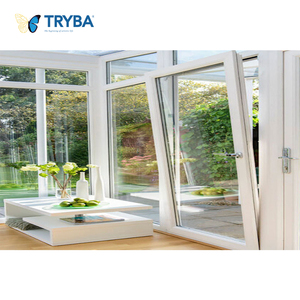
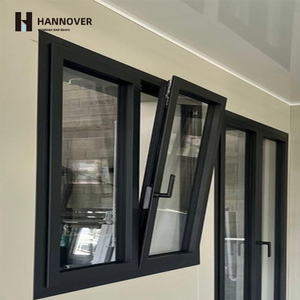
Modern NFRC Aluminum Casement Window Double or Triple Glazed Tilt and Turn Window Custom Sizes for Villa Commercial Projects

Modern NFRC Aluminum Casement Window Double or Triple Glazed Tilt and Turn Window Custom Sizes for Villa Commercial Projects

NFRC-certified thermal break aluminum dual-action tilt-and-turn windows. Designed for optimal exterior ventilation, micro-seal weatherproofing, and architectural elevation versatility.

Custom High Quality UPVC German Windows Tilt And Turn Windows

Custom High Quality UPVC German Windows Tilt And Turn Windows

Precision German hardware engineering paired with steel-reinforced uPVC profiles, providing superior STC acoustic insulation and absolute water tightness in driven-rain environments.

Wholesale High Quality UPVC Windows for Bulk Order Building Material Projects and Commercial Construction Solutions

Wholesale High Quality UPVC Windows for Bulk Order Building Material Projects and Commercial Construction Solutions

Commercial-scale fenestration packages formulated for large multi-family residential developments, offering high volume thermal efficiency, certified durability, and streamlined jobsite delivery scheduling.

Double Glazed Aluminum Alloy Swing Casement Window Thermal Break System For Energy Efficient Villa Homes

Double Glazed Aluminum Alloy Swing Casement Window Thermal Break System For Energy Efficient Villa Homes

Polyamide thermal barrier aluminum frames featuring warm-edge spacer technology and argon-infused double glazing, maximizing occupant comfort while minimizing structural heating loads.

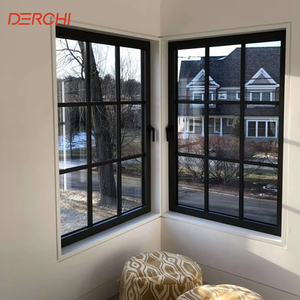
Modern Narrow Frame Commercial Customized Triple Glazed Aluminum European Style Casement windows Black for Residential windows

Modern Narrow Frame Commercial Customized Triple Glazed Aluminum European Style Casement windows Black for Residential windows

Ultra-narrow sightline architectural frames with matte black anodized finishes, designed for contemporary commercial facades requiring maximized natural light intake and sleek aesthetic lines.

European Style Energy Star Energy Efficient Thermal Break Aluminium Triple Glazed Aluminum Passive House Windows

European Style Energy Star Energy Efficient Thermal Break Aluminium Triple Glazed Aluminum Passive House Windows

Certified Passive House standard window systems utilizing structural thermal breaks and triple-silver solar control Low-E glass, engineered to eliminate condensation and achieve zero-net thermal loss.

1999
Established Industry Track Record
7 of 10
Top U.S. General Contractors Served
75%+
Repeat Commercial Clients
U-0.14
Passive House Thermal Performance
Pacific Northwest Engineering Focus

Optimizing Commercial Fenestration for Seattle’s Built Environment

Navigating Marine Atmospheric Corrosion, Microclimate Moisture Loads, and Strict Energy Compliance

Seattle Energy Code (SEC) & Washington State (WSEC) Mandates

Commercial construction within King County operates under some of North America's most rigorous energy conservation codes. The latest Seattle Energy Code revisions enforce lower overall assembly U-factors (frequently demanding U-values ≤ 0.22 to 0.26 for vertical glazing) and strict Solar Heat Gain Coefficients (SHGC). Commercial glazing factories servicing Seattle must provide advanced thermal break structural aluminum extrusions equipped with polyamide isolators (PA66 GF25) and multi-layered Low-E coatings (such as double or triple-silver spectrally selective coats) to balance passive daylighting against stringent net-zero carbon mandates.

Driven-Rain & Coastal Atmospheric Corrosion Resilience

Situated along Puget Sound, Seattle experiences persistent horizontal wind-driven rainfall paired with marine salt-air corrosion risks in zones like Elliott Bay, South Lake Union, and Harbor Island. Standard window assemblies often fail at sill transitions and exterior gasket interfaces under prolonged pressure. Our factory partners engineer custom flashings, integrated sub-sill drainage pans, and heavy anodized or fluoropolymer AAMA 2605 powder coatings. Every system is subjected to dynamic water infiltration testing (ASTM E331 & AAMA 501.2) to guarantee zero water penetration up to 15 PSF pressure differentials.

Structural Engineering & Seismic Performance (ASCE 7 Drift Limits)

Seattle’s location within Seismic Design Category D/E demands commercial curtain wall and storefront assemblies capable of absorbing significant inter-story drift without glass fallout or seal failure. Our commercial glazing packages incorporate structural silicone glazing (SSG) combined with floating mullion attachment anchors that accommodate dynamic structural movement, high wind load resistance (up to 60+ PSF), and thermal expansion cycles unique to the Pacific Northwest region.

Technical Comparison Matrix: Commercial Glazing Framing Systems

Comparing performance metrics across high-density multi-family and commercial envelope specifications.

System Profile Type Overall U-Factor Range SHGC Rating Options Acoustic Rating (STC) Best Local Application
Thermally Broken Aluminum (PA66) 0.24 - 0.30 BTU/h·ft²·°F 0.22 - 0.40 STC 36 - 42 Mid-to-High Rise Mixed Use & Office Towers
Steel-Reinforced uPVC (Multi-Chamber) 0.14 - 0.22 BTU/h·ft²·°F 0.18 - 0.35 STC 38 - 45 Urban Multi-Family & Affordable Housing
Unitized Structural Silicone Glazing (SSG) 0.20 - 0.28 BTU/h·ft²·°F 0.20 - 0.38 STC 40 - 48+ Downtown Commercial Towers & High-Slender Elevated Facades
Passive House Certified Triple-Glazed 0.10 - 0.15 BTU/h·ft²·°F 0.25 - 0.50 STC 42 - 50 Net-Zero Commercial & Higher Ed Research Facilities
Targeted Field Deployments

Localized Commercial Application Scenarios in Puget Sound

Tailoring Fenestration Packages to Distinct Neighborhood Typologies and Zoning Requirements

High-Density Multi-Family Podium Builds (South Lake Union & Ballard)

In dense urban hubs like South Lake Union, Capitol Hill, and Ballard, 5-over-1 podium and wrap developments require rapid envelope closure. Our bulk factory supply programs provide pre-glazed uPVC and aluminum window wall units delivered in floor-by-floor sequences. High STC acoustic glass configurations mitigate noise pollution from light rail lines and heavy transit corridors while satisfying stringent energy performance targets.

Commercial Office Towers & Tech Campuses (Bellevue & Downtown)

High-rise corporate headquarters require sleek glass curtain wall systems capable of optimizing natural daylight while managing solar heat gain. Utilizing spectrally selective triple Low-E coatings, warm-edge spacers, and electrochromic glass integrations, our factory-direct custom glazing minimizes interior HVAC reliance while maintaining striking architectural aesthetics along the Bellevue and Seattle sky-lines.

Mass Timber & Hybrid Eco-Structures (Pioneer Square & Central District)

Seattle leads North America in mass timber and environmentally progressive architectural projects. Integrating heavy fenestration packages into Cross-Laminated Timber (CLT) framing requires deep expertise in specialized perimeter sealants, air barrier flashing continuity, and dynamic expansion movement joints to uphold airtightness and environmental product declaration (EPD) mandates.

Industry Evolution

Regional Fenestration Trends Reshaping Seattle Construction

Emerging Architectural Demands and Environmental Imperatives across King County

1. Decarbonization & Embodied Carbon EPD Compliance

Seattle developers and general contractors are increasingly prioritized by carbon-neutral initiatives. Modern commercial glazing specifications now demand Environmental Product Declarations (EPDs) proving low embodied carbon footprint in aluminum smelting, frame extrusion, and glass processing. Our supply chains align directly with LEED v4.1 requirements, offering low-carbon recycled aluminum and locally processed glass units that lower initial project carbon expenditures.

2. Rapid Adoption of Passive House Commercial Standards

Passive House (PHIUS) certification is no longer reserved for niche single-family homes in the Pacific Northwest; it has expanded into large-scale commercial and multi-family housing. The demand for triple-glazed thermally isolative uPVC and timber-clad aluminum window systems has surged by over 45% in the region. These systems eliminate cold perimeter drafts, reduce heating loads during chilly Seattle winters, and prevent condensation rot entirely.

3. Prefabricated Unitized Window Walls & Prefab Systems

With high field labor costs in Seattle, general contractors are shifting rapidly away from stick-built storefronts toward factory-assembled unitized window wall systems. Assembled and sealed under controlled factory conditions, unitized panels arrive at the jobsite ready for immediate crane hoisting and inter-floor anchoring, reducing on-site installation timelines by up to 35% while eliminating weather-related installation delays.

4. Acoustic Attenuation along Active Transit Lines

As transit-oriented developments (TOD) expand near Sound Transit Link Rail stations and major urban arterials (I-5, SR-99), high Sound Transmission Class (STC) and Outdoor-Indoor Transmission Class (OITC) window ratings have become non-negotiable. Utilizing asymmetric laminated glass thickness and acoustic PVB interlayers, our customized glazing units isolate ambient city traffic noise to maintain quiet interior residential standards.

Single-Source Accountability

The Single-Partner Enterprise Advantage

Eliminating the Friction Gap Between Product Manufacturer and Jobsite Field Installer

Traditional construction workflows split fenestration responsibility between product brokers, overseas factories, and local sub-contractors. When a window leaks or fails air-infiltration tests, parties routinely pass blame. We eliminate this failure loop by operating as a unified supply, engineering, submittal, installation, and warranty partner.

Phase 1: Pre-Con & Submittals

Thorough plan review, opening take-offs, thermal calculations under SEC/WSEC standards, shop drawings, engineering calculation stamps, and long-lead supply chain sequencing.

Phase 2: Mock-Ups & Testing

Full-scale jobsite mock-up construction verified alongside window manufacturers, flashing suppliers, and third-party QA agencies under AAMA 501.2 field water testing protocols.

Phase 3: Sequenced Installation

Supervised field crews executing structured installation details floor-by-floor. Direct integration with Weather-Resistive Barriers (WRB), fluid-applied flashings, and sill pans.

Phase 4: Post-Occupancy Service

Rapid punch-list resolution, ongoing glass replacement support, hardware adjustment services, and direct long-term warranty backed by trusted factory guarantees.

Frequently Asked Questions

Seattle Commercial Glazing & Procurement FAQ

Expert Guidance for General Contractors, Developers, and Commercial Architects

How do your window assemblies comply with the latest Seattle Energy Code (SEC)?

Our commercial fenestration systems utilize advanced thermal break polyamide struts, warm-edge silicone spacer bars, and low-emissivity (Low-E) double and triple-glazed glass units. We provide NFRC-certified test reports demonstrating assembly U-factors as low as 0.14 to 0.22, comfortably satisfying or exceeding Seattle and Washington State (WSEC) energy code thresholds.

How are direct factory shipments managed into dense Seattle jobsites?

We coordinate factory procurement directly with container freight staging at the Port of Seattle or Port of Tacoma. Cargo is sequenced and palletized by floor level or building wing, then delivered via flatbed trucks precisely when your framing and WRB teams are ready for window insertion, preventing jobsite clutter in high-density areas like Bellevue or Downtown Seattle.

What moisture management details are implemented for recessed window openings?

Recessed openings are notorious for water infiltration in wind-driven rain climates. We construct project-specific flashing details in collaboration with leading membrane manufacturers (including fluid-applied membrane integration, back-bead sealant lines, self-adhering sill pans, and end-dams). These details are validated through jobsite mock-ups before full installation commences.

Can you assist with architectural submittal packages and shop drawings?

Yes. Our engineering team prepares complete architectural submittal packages including structural wind-load calculations, thermal performance simulations (NFRC certified), structural silicone detail drawings, frame perimeter anchoring details, and samples for architectural approval.

What acoustic ratings can be achieved for transit-adjacent multi-family developments?

By pairing varying glass pane thicknesses (such as 6mm exterior + 4mm interior) with acoustic polyvinyl butyral (PVB) or sound-dampening laminated interlayers, our commercial window units achieve Sound Transmission Class (STC) ratings up to STC 45+ and OITC ratings over 36, ideal for properties bordering arterial highways and rail lines.

Do you offer field water testing support during construction?

Absolutely. We coordinate on-site nozzle testing (AAMA 501.2) and chamber testing (ASTM E1105) alongside independent third-party envelope consultants to verify water tightness under active field conditions, ensuring zero water leaks before interior drywall installation begins.

Ready to Request Architectural Submittals or Project Pricing?

Connect with our technical commercial glazing team to review project drawings, evaluate WSEC compliance, or schedule a field mock-up for your upcoming Seattle development.

Send an Inquiry