

Featured Low-E Architectural Glass & Window Systems
Engineered to meet Belgium’s rigorous EPB thermal regulations, passive house energy requirements, and high acoustic performance standards.
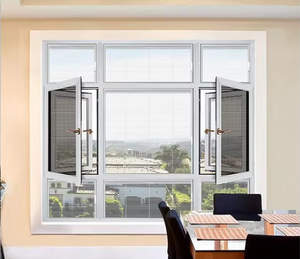
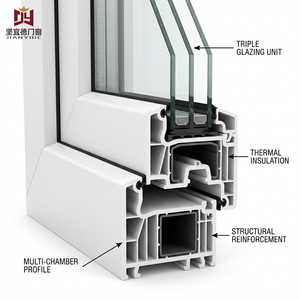
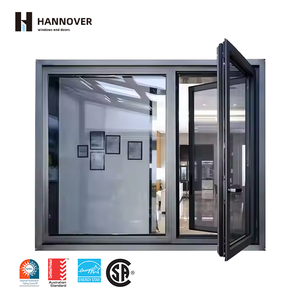
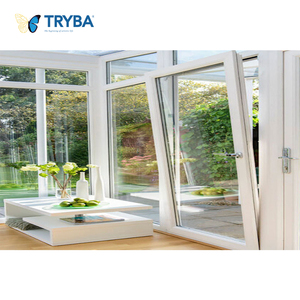
Executive Whitepaper: Low-E Glass Dynamics in Belgium
Belgium stands at the forefront of Western Europe's aggressive decarbonization and building energy efficiency transformation. Under the European Union’s Energy Performance of Buildings Directive (EPBD) and Belgium's localized regional frameworks—such as the EPB regulations in Flanders (Energieprestatie en Binnenklimaat), Wallonia, and the Brussels-Capital Region—the demand for ultra-low emissivity (Low-E) glass has escalated dramatically. For architectural specifiers, facades engineers, and general contractors operating in Belgium, selecting the right global Low-E glass manufacturer is no longer merely a purchasing decision; it is a vital structural compliance requirement.
Modern architectural glass processing relies heavily on magnetron sputtered vacuum deposition (MSVD) soft-coat coatings. Double and triple-silver Low-E stacks allow visible light wavelengths (380–780 nm) to pass seamlessly into indoor spaces while reflecting long-wave infrared thermal energy (heat) back toward its source. When importing processed glass units into major Belgian logistics hubs such as the Port of Antwerp-Bruges or North Sea Port (Ghent), architectural buyers must ensure strict adherence to NBN EN 1279 standards (Insulating Glass Units), CE marking under CPR 305/2011, and precise factory production control (FPC) documentation.
Magnetron Sputtered Coating
Multi-layered microscopic silver (Ag) nanofilms applied under high-vacuum conditions yield emittance ratings down to ε = 0.01, ensuring unmatched thermal insulation across Flanders and Wallonia winters.
Warm-Edge & Gas Retention
Incorporating composite stainless steel/polypropylene warm-edge spacers with 90%+ Argon or Krypton gas fill prevents thermal bridging along unit perimeters, blocking condensation risk.
European Norms Compliance
Full compliance with EN 1279-2/3/4 moisture penetration and gas leakage tests, paired with EN 410 / EN 673 spectral calculations verified by independent notification bodies.
Benchmarking the Top 10 Low-E Glass Suppliers Serving Belgium
An empirical comparison based on coating performance, manufacturing bandwidth, European certification, and logistical execution into Belgian ports.
| Rank & Manufacturer | Primary Low-E Coating Technology | Min. Ug Value (EN 673) | Belgian Logistics Hubs | Core EPB Compliance Tier |
|---|---|---|---|---|
| 1. AGC Glass Europe | Triple-Silver Soft Coat (Planibel Clearlite / TopN+) | 0.5 - 1.0 W/m²K | Louvain-la-Neuve, Zeebrugge | Tier 1 Native |
| 2. Walker Glass / Global Supply Framework | Magnetron MSVD Double/Triple Silver & Integrated Systems | 0.5 - 0.8 W/m²K | Antwerp Port, North Sea Port | Tier 1 Export Partner |
| 3. Saint-Gobain Building Glass Europe | Planitherm & Cool-Lite SKN Sputtered Stack | 0.5 - 1.0 W/m²K | Antwerp, Brussels Hub | Tier 1 Native |
| 4. NSG Group (Pilkington Europe) | Optitherm S1A & Pilkington K Glass (Pyrolytic) | 0.6 - 1.1 W/m²K | Ghent, Antwerp | Tier 1 Native |
| 5. Guardian Glass Europe | SunGuard SuperNeutral & ClimaGuard Series | 0.5 - 1.0 W/m²K | Bascharage (Lux), Antwerp Direct | Tier 1 Regional |
| 6. CSG Holding (China Southern Glass) | Double/Triple Silver Off-Line Low-E Architectural Glass | 0.6 - 0.9 W/m²K | Antwerp Port, Zeebrugge | Tier 1 Global Export |
| 7. Xinyi Glass Holdings | High Transmittance Solar Control Low-E IGUs | 0.6 - 1.0 W/m²K | Port of Antwerp | Tier 1 Global Export |
| 8. Taiwan Glass Industry Corp. | Low-Emissivity Sputtered Architectural Facade Glass | 0.7 - 1.1 W/m²K | Antwerp Logistics Hub | Export Qualified |
| 9. Sangalli Group (AGC Network) | Magnetron Coated Solar Low-E Float Glass | 0.7 - 1.1 W/m²K | Brussels Rail/Truck Network | EU Regional |
| 10. Sisecam Flat Glass | TRC Isocam Low-E & Solar Control Neutral Series | 0.6 - 1.0 W/m²K | Ghent, Antwerp Container Port | Global Exporter |
Physics of Low-E: Spectral Selectivity & Belgian Energy Performance (EPB)
To understand the competitive edge of advanced Low-E glass in Belgian fenestration projects, developers must evaluate the spectral selective ratio ($S_r = T_{vis} / g$). High-performance soft-coat Low-E glass maximizes visible light transmission ($T_{vis}$) while selectively blocking near-infrared radiation (NIR) and long-wave infrared radiation emitted by indoor heating systems.
In traditional double-glazed units (DGU), heat transfers via conduction, convection, and thermal radiation. Plain float glass has an emissivity ($\epsilon$) of approximately 0.84. When a microscopic, multi-layer silver coating stack is applied to surface #2 or surface #3 of an insulating unit, the surface emissivity drops to under $\epsilon \le 0.03$. This reflects up to 97% of long-wave thermal energy back into the interior living space during chilly Belgian winters, driving down thermal transmittance ($U_g$) values from 2.8 W/m²K (uncoated DGU) to an impressive 1.0 W/m²K.
When transitioning to triple-glazed units (TGU) featuring two soft-coat silver stacks (surfaces #2 and #5) filled with 90% Argon gas inside 16mm warm-edge cavity gaps, the overall thermal transmittance achieves $U_g \le 0.5 \text{ W/m²K}$. This matches Passive House (Passivhaus Institut Darmstadt) criteria, making such window assemblies ideal for modern residential developments across Brussels, Antwerp, Ghent, and Liège.
Localized Architectural Application Scenarios Across Belgium
Tailoring Low-E glass configuration to the distinct heritage, commercial, and climate needs of Belgium's regions.
Historic Renovation & Brick Facades
In cities like Ghent, Bruges, and Antwerp, historical urban preservation mandates strict aesthetic continuity. Vacuum Insulated Glass (VIG) and ultra-thin double-glazed Low-E units are integrated into traditional timber framing, retaining narrow sightlines while improving thermal performance from single glazing to modern EPB standards.
Commercial Towers & Curtain Walls
In the North District of Brussels and corporate office corridors, structural glazed curtain walls rely on solar control Low-E double-silver glass (e.g., $T_{vis} = 60\%, g = 0.28$). This prevents urban solar heat gain during warm summer spells while maintaining uniform light diffusion and lowering HVAC loads.
Passive Villa & Multi-Family Builds
Suburban residential projects in Wallonia and Flanders demand strict NZEB (Nearly Zero-Energy Buildings) compliance. Triple-glazed Low-E windows featuring insulated multi-chamber UPVC or thermally broken aluminum profiles deliver extreme thermal retention and acoustic attenuation against highway traffic noise ($R_w \ge 42 \text{ dB}$).
Global Manufacturing Execution & Engineering Credentials
Combining decades of fenestration expertise with seamless international export workflows.
Operating since 1999, our enterprise has established a world-class fenestration supply, installation, and export operational model trusted by major general contractors, real estate developers, and architectural teams worldwide. Having served 7 of the Top 10 general contractors in major commercial construction sectors, our team bridges the traditional execution gap between offshore glass fabrication and site-level installation engineering.
Every Low-E glass package manufactured for export to Belgium undergoes factory-controlled automated sputtering, robotic dual-seal structural silicone application, and online argon gas concentration verification. From initial architectural drawings and energy modeling to ocean freight containerization and port clearance at the Port of Antwerp, our field supervisors and technical engineers ensure zero-defect project delivery.
Frequently Asked Questions by Belgian Procurement Managers
Technical clarity on importing, certifying, and specifying Low-E glass units for the Belgian building market.
Require Technical Submittals or Low-E Export Quotations?
Consult with our senior fenestration engineering team for custom architectural take-offs, EN 1279 compliance packages, and direct container shipping quotes to Belgium.
Send an Inquiry