

Certified Fenestration Systems & Pre-Tested Configurations
Precision-engineered window solutions rigorously evaluated through physical jobsite mock-up testing for water penetration, structural deflection, and air infiltration.
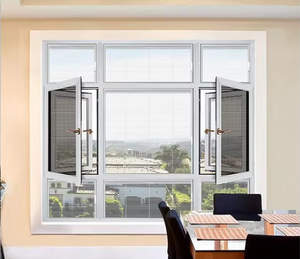
High Quality Modern Design Large Casement Windows Custom Hurricane Impact Anti-Theft Aluminum Glass House Windows
Multi-point locking security integrated with structural impact resistance. Field-tested under intense dynamic wind load and heavy pressure conditions to resist water ingress during severe weather events.
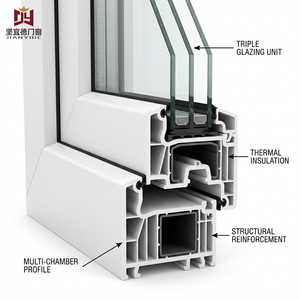
Energy Saving Multi-Chamber UPVC Casement Window | UV Resistant Triple Glazed Vinyl Window
Formulated with high-grade UV stabilizers to prevent discoloration under extreme tropical sunshine. Features multi-chamber thermal breaks and triple-seal perimeter gaskets for maximum energy efficiency.
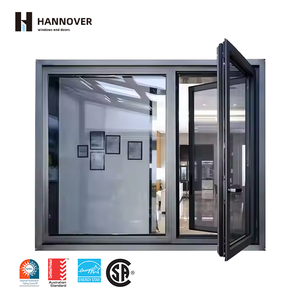
Modern NFRC Aluminum Casement Window Double or Triple Glazed Tilt and Turn Window
Dual-function European tilt-and-turn architectural window certified for thermal transmittance. Pre-engineered submittals and full mock-up laboratory performance records ensure swift project approval.
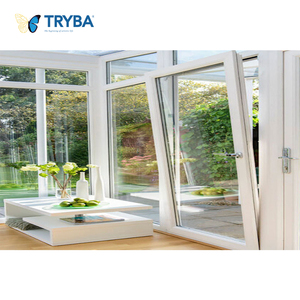
Custom High Quality UPVC German Windows Tilt And Turn Windows
Precision-milled German profile architecture providing superior sound insulation (STC ratings up to 45dB) and flawless hardware longevity under high daily operating frequencies.
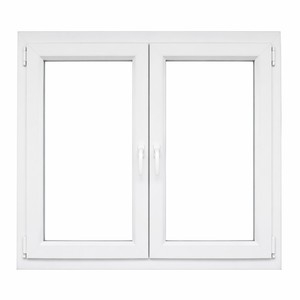
Wholesale High Quality UPVC Windows for Bulk Order Building Material Projects
Scalable, standardized high-volume fenestration packages specifically crafted for major multi-family, commercial podiums, and large residential townships requiring swift supply timelines.
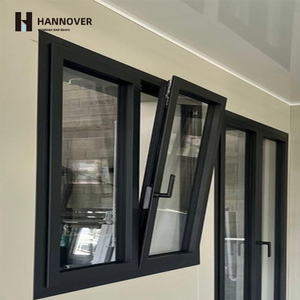
Double Glazed Aluminum Alloy Swing Casement Window Thermal Break System
High-tensile aluminum framing with polyamide thermal barriers. Eliminates thermal bridging, reduces HVAC loads, and maintains structural rigidity under heavy dynamic wind pressure.
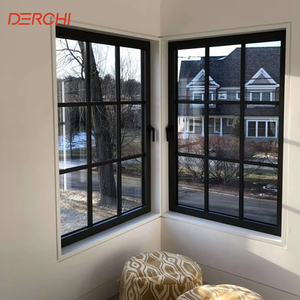
Modern Narrow Frame Commercial Customized Triple Glazed Aluminum European Style Casement Windows
Minimalist ultra-narrow sightlines designed for panoramic vistas. Engineered to accommodate heavy triple-glazed acoustical glass units while exceeding stringent water tightness criteria.
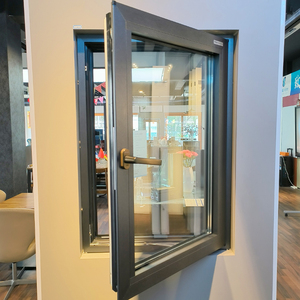
European Style Energy Star Energy Efficient Thermal Break Aluminium Triple Glazed Passive House Windows
Ultra-low U-value structural window units built for green building certifications (LEED / GRIHA). Tested under extreme thermal differential and air tightness protocols for zero thermal loss.
Closing the Technical Gap Between Supply and Installation
Why Tier 1 developers, structural engineers, and general contractors rely on our single-source fenestration and mock-up verification model.
In high-density commercial construction and residential multi-family towers, window failures rarely originate from raw material defects alone. The overwhelming majority of jobsite leaks, air infiltration complaints, and structural deflections occur inside the unmanaged gap between the window supplier and the field installation contractor. When fenestration supply is decoupled from site execution and pre-installation testing, accountability vanishes the moment water breaches the building envelope.
Founded in 1999, our enterprise was established to eliminate this structural risk completely. Operating with a single-point accountability framework, we manage every phase of the fenestration lifecycle: architectural shop drawings, engineering submittals, factory manufacturing, export logistics, full-scale pre-installation jobsite mock-up assembly, field water testing supervision, and long-term post-occupancy service warranty support. Having served 7 of the Top 10 National Multifamily Housing Council (NMHC) top general contractors in the United States and expanded operations globally into high-growth markets like India, we bring institutional-grade rigor to every opening.
Pre-Construction Planning
Comprehensive architectural submittal packages, shop drawing development, Title 24 & ECBC thermal compliance verification, and custom extrusion profiling tailored to structural engineering criteria.
Pre-Installation Mock-Up Testing
Constructing full-scale visual and performance mock-up assemblies on-site. Coordinating dynamic water spray testing, air pressure chamber testing, and third-party laboratory sign-offs before mass manufacturing.
Supervised Installation Execution
Direct field supervision over flashing integration, continuous weather barrier transitions, perimeter sealing, recessed sill pan detailing, and floor-by-floor delivery sequencing to safeguard build schedules.
Engineering Window Mock-Up Testing for India's Microclimates
A comprehensive analysis of structural wind pressures, torrential monsoon water tightness, and sound attenuation standards under Indian building codes (IS 875 & NBC 2016).
India represents one of the most structurally demanding environments for building envelope engineering. From the extreme cyclonic wind loads along the eastern and western coastal belts (Mumbai, Chennai, Visakhapatnam) to the intense monsoon rain deluges and urban noise pollution of NCR, Bengaluru, and Hyderabad, off-the-shelf fenestration profiles routinely experience premature field failure if not thoroughly validated through pre-installation mock-up testing.
Key Engineering Standard: Jobsite mock-up testing validates the entire fenestration assembly—including glass, aluminum extrusions, corner cleats, perimeter flashing membranes, sealants, and anchoring substrates—under simulated extreme weather before mass production installation begins.
1. Water Penetration Resistance Testing (ASTM E1105 / BS EN 1027 Alignment)
During the Southwest and Northeast monsoons, driven rain hits high-rise building facades with static and dynamic pressure heads exceeding 750 Pa. Standard gravity water tests are completely inadequate for detecting structural water paths. Our mock-up testing protocol utilizes calibrated spray racks combined with negative air pressure chambers mounted directly to jobsite mock-up openings. We verify that zero uncontrolled water breaches the interior sill pan or rough opening perimeter at pressure differentials matched to local 50-year storm metrics.
2. Structural Wind Load & Deflection Limits (IS 875 Part 3 / ASTM E330)
As Indian vertical urbanization reaches 40 to 70+ stories, wind pressures on upper floor corner zones scale exponentially. In accordance with IS 875 (Part 3) design wind speeds (up to 55 m/s in coastal zones), window mock-ups undergo positive and negative structural load testing. We measure mullion deflection to ensure it remains strictly within $L/175$ or $L/240$ limits, preventing glass bite dislodgement, seal degradation, or permanent frame deformation.
3. Acoustic Attenuation for Tier 1 Urban Centers (STC / Rw Ratings)
Ambient noise levels in dense Indian metro corridors frequently exceed 75-85 dB due to traffic and commercial activity. High-performance multi-family and hotel projects demand sound transmission class (STC) ratings between 38 dB and 45 dB. Our pre-tested triple-glazed acoustic laminates and warm-edge spacer profiles undergo field chamber sound isolation validation to guarantee tranquil indoor environments.
4. Waterproofing Recessed Openings & Flashing Integration
Recessed fenestration openings represent the most complex waterproofing condition in modern Indian architectural designs. Water accumulates on exposed exterior ledges, creating immense hydrostatic head against the bottom frame corners. Our engineering teams design project-specific membrane flashing sequences, verifying them physically during the mock-up phase to train local installation teams and ensure flawless repetition across thousands of openings.
| Testing Parameter | International / Indian Standard | Testing Benchmark | Engineering Engineering Outcome |
|---|---|---|---|
| Air Infiltration | ASTM E283 / IS 13935 | < 0.1 cfm/ft² at 1.57 psf (75 Pa) | Eliminates dust ingress, minimizes HVAC energy loss in polluted metro zones. |
| Static Water Resistance | ASTM E331 / BS EN 1027 | No leakage at 15% of positive structural design pressure (min 300 - 750 Pa) | Prevents interior water damage during monsoon deluge conditions. |
| Dynamic Water Resistance | AAMA 501.1 / Field ASTM E1105 | High-velocity spray rack with dynamic wind generator | Validates sealant joint integrity and perimeter flashing membrane bounds. |
| Structural Performance | ASTM E330 / IS 875 (Part 3) | 150% Design Wind Pressure (Proof Load) | Guarantees frame integrity during severe cyclones without glass pop-out. |
| Acoustic Insulation | ASTM E90 / ISO 717-1 | STC 38 to STC 48 / Rw 40+ dB | Provides premium acoustic isolation in high-traffic commercial hubs. |
Localized Fenestration Application Scenarios Across India
Custom-engineered window supply packages designed to match specific regional building topographies and environmental challenges.
Mumbai, Chennai & Gujarat Coastline
Environmental Challenge: Severe marine salt air corrosion, high ambient humidity, and intense monsoon wind pressure.
Engineering Solution: Heavy-duty anodized or PVDF-coated thermal break aluminum casement systems paired with stainless steel 316 friction stays and anti-corrosive multi-point locks, validated via ASTM E1105 field water mock-ups.
Delhi NCR, Gurugram & Noida
Environmental Challenge: Extreme seasonal thermal variance (47°C summer heat to 4°C winter cold) combined with severe air smog.
Engineering Solution: Multi-chamber UPVC and triple-glazed Low-E window systems with argon gas filling, achieving low U-values (< 1.3 W/m²K) to dramatically cut building operational HVAC costs.
Bengaluru, Hyderabad & Pune
Environmental Challenge: High acoustic noise near arterial ring roads, high architectural design standards for narrow sightlines.
Engineering Solution: Slim-line European profile tilt-and-turn fenestration integrated with sound-attenuation laminated glass, offering optimal natural daylighting alongside high STC ratings.
Key Market Trends Driving Indian Architectural Fenestration
Understanding the transition toward high-performance system windows, green building mandates, and standardized field testing.
1. Mandatory Adoption of ECBC and NBC 2016 Energy Compliance
With the Indian Bureau of Energy Efficiency (BEE) enforcing the Energy Conservation Building Code (ECBC), developers can no longer utilize uninsulated, single-glazed aluminum profiles for commercial projects. Modern tenders explicitly specify maximum Solar Heat Gain Coefficients (SHGC ≤ 0.25) and low overall U-values. Pre-tested thermal break aluminum and high-grade UPVC assemblies have become the industry standard for securing building completion certificates.
2. Shift from Fabrication to Engineered System Windows
Historically, the Indian window market relied heavily on localized unorganized fabricators who manual-cut profiles on site without standardized weather-stripping or drainage engineering. Tier 1 developers now mandate factory-fabricated, certified system windows backed by comprehensive submittal packages, shop drawings, and third-party laboratory performance testing.
3. Rise of Green Building Certifications (GRIHA & LEED India)
Commercial office parks and high-end multi-family projects in India are actively pursuing LEED Gold/Platinum and GRIHA star ratings. Windows play a pivotal role in achieving daylight credit points while maintaining low overall thermal transfer values (OTTV). Mock-up testing verifies air tightness, ensuring zero leakage of conditioned air and maximizing green building scoring.
Frequently Asked Buyer Questions (India Market)
Clear responses to common technical, logistical, and testing inquiries from project architects, general contractors, and procurement heads.
Ready to Verify Your Project's Fenestration Performance?
Submit your architectural elevation drawings, structural specifications, or tender schedules. Our fenestration engineering team will prepare complete submittals and mock-up testing proposals tailored for your project in India.